
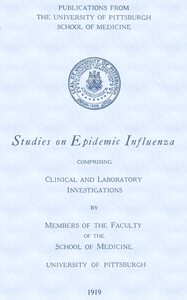
Studies on Epidemic Influenza: Comprising Clinical and Laboratory Investigations
Written by University of Pittsburgh. School of Medicine
Chaptra reads alongside you — AI insights, chapter breakdowns and reader discussions for every book. Join free
About this book
Reading guide
Themes, characters and key ideas in Studies on Epidemic Influenza: Comprising Clinical and Laboratory Investigations, written by Chaptra AI.
- about 8 hours
- advanced
- Informative
- Clinical
- Urgent
Studies on Epidemic Influenza: Comprising Clinical and Laboratory Investigations is a seminal scientific publication from the University of Pittsburgh School of Medicine, detailing the comprehensive research undertaken during the devastating 1918-1919 influenza pandemic. The work provides a meticulous account of the disease's history, epidemiological spread, and clinical manifestations, particularly within Pittsburgh's military and educational sectors. It documents the urgent medical responses, including the establishment of emergency facilities, and the high incidence and mortality rates observed. This publication serves as a crucial historical record, laying the groundwork for understanding early 20th-century medical approaches to large-scale public health crises and the nascent stages of virological research.
“The rapidity of the epidemic's spread through the civilian and military populations presented an unprecedented challenge to the medical community.”
Key themes
- Public Health Crisis and Response
- This theme explores how society and the medical establishment respond to an overwhelming health emergency. The book vividly describes the chaos, the mobilization of resources, the establishment of emergency facilities, and the desperate attempts to contain and treat a rapidly spreading, deadly disease. It highlights the societal impact of a pandemic and the critical role of organized medical response.
- Scientific Investigation and Discovery
- The book is fundamentally a testament to the scientific method applied in crisis. It details the painstaking process of clinical observation, data collection, laboratory analysis (even with limited technology), and the systematic attempt to understand the etiology, pathology, and epidemiology of a new disease. It underscores the iterative nature of scientific inquiry and the relentless pursuit of knowledge to combat disease.
- Limitations of Early 20th Century Medicine
- This theme is implicitly woven throughout the study, showcasing the state of medical knowledge and technology during the 1918 pandemic. It illustrates the challenges faced by doctors who lacked antibiotics, antivirals, advanced diagnostic tools, and a complete understanding of viral pathogens. The book reveals the desperate measures and symptomatic treatments employed, often with limited success, highlighting the rapid advancements in medicine since that era.
Worth discussing
How does the medical community's response to the 1918 pandemic, as documented in this study, compare to modern pandemic responses (e.g., COVID-19)?
Chapter-by-chapter breakdowns, character arcs and the full thematic analysis come with a free account.
Discussions
No one has started one yet
Questions this book opens up
No discussions yet
Be the first to start a discussion about this book!
Sign up to start the discussionReviews
No reviews yet
Be the first to review this book!