
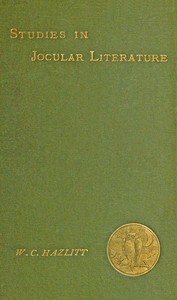
Studies in jocular literature : $b A popular subject more closely considered
Written by William Carew Hazlitt
Chaptra reads alongside you — AI insights, chapter breakdowns and reader discussions for every book. Join free
About this book
Reading guide
Themes, characters and key ideas in Studies in jocular literature : $b A popular subject more closely considered, written by Chaptra AI.
- about 12 hours
- advanced
- scholarly
- historical
- analytical
William Carew Hazlitt's "Studies in Jocular Literature" offers a scholarly deep dive into the historical evolution and cultural significance of humor and anecdotal writing from the late 19th century. Far beyond mere amusement, Hazlitt positions jocularity as a critical lens through which to understand societal conditions, human expression, and cultural contexts across different eras. The book meticulously traces the journey of humor from ancient oral traditions to formalized printed collections, highlighting its transformative role and the respect historically accorded to jesters and humorists. By exploring various forms of jest and anecdote, Hazlitt argues that what appears trivial on the surface often conceals profound insights into human experience and historical narratives. It serves as a comprehensive exploration, framing humor not just as entertainment but as an indispensable part of cultural and literary history.
“"Jocular literature, often dismissed as the mere froth of human expression, reveals upon closer inspection the very currents and depths of society's evolving thought."”
Key themes
- The Cultural and Historical Significance of Humor
- This is the overarching theme, central to Hazlitt's entire work. He argues that humor is not just amusement but a vital social asset, a form of expression that reflects and shapes cultural values, social hierarchies, and historical periods. It's a lens through which to understand human experience across time.
- The Evolution of Literary Forms and Transmission
- Hazlitt explores how jocular literature transitioned from ephemeral oral traditions to more permanent written and printed forms. This theme examines the impact of technology and literacy on the preservation, dissemination, and very nature of humor, showing how its structure and content adapted over time.
- The Interplay of Triviality and Profundity
- A core argument of the book is that what appears on the surface to be trivial or mere amusement often contains deeper cultural, historical, or psychological insights. Hazlitt challenges the reader to look beyond the superficiality of a joke or anecdote to uncover its underlying significance, demonstrating how seemingly lighthearted content can reveal profound truths about human nature and society.
Worth discussing
How does Hazlitt's argument for the 'utility' of jests and anecdotes challenge contemporary perceptions of humor as mere entertainment?
Chapter-by-chapter breakdowns, character arcs and the full thematic analysis come with a free account.
Discussions
No one has started one yet
Questions this book opens up
No discussions yet
Be the first to start a discussion about this book!
Sign up to start the discussionReviews
No reviews yet
Be the first to review this book!