
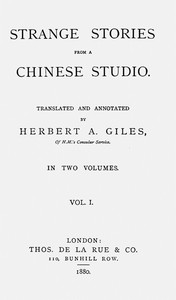
Strange Stories from a Chinese Studio, Vol. 1 (of 2)
Written by Songling Pu
Chaptra reads alongside you — AI insights, chapter breakdowns and reader discussions for every book. Join free
About this book
Reading guide
Themes, characters and key ideas in Strange Stories from a Chinese Studio, Vol. 1 (of 2), written by Chaptra AI.
- about 20 hours
- advanced
- mysterious
- philosophical
- supernatural
Pu Songling's "Strange Stories from a Chinese Studio, Vol. 1" is a seminal collection of supernatural tales from late 17th-century China, offering a vivid portal into the era's folklore, philosophy, and societal values. Through its diverse narratives, the volume masterfully blends entertainment with profound moral instruction, frequently exploring virtues like filial piety and loyalty, and the complex interplay between human intentions and their consequences. The collection is framed by Herbert A. Giles' insightful translator's introduction, which contextualizes Pu Songling's literary significance. The opening tale, "Examination for the Post of Guardian Angel," exemplifies the collection's unique charm, introducing Mr. Sung's fantastical journey into the afterlife and his moral quandaries as a newly appointed celestial guardian, setting a thought-provoking tone for readers interested in cultural nuances and the supernatural.
“"The ways of the spiritual world are often but a reflection, albeit distorted, of the follies and virtues of our own."”
Key themes
- The Supernatural and the Mundane
- This theme explores the seamless integration of ghosts, fox spirits, deities, and other fantastical beings into everyday human life. The supernatural is not just an external force but often a reflection or extension of human emotions, desires, and societal structures. It serves to illuminate aspects of reality that are otherwise hidden or ignored, blurring the lines between the natural and the extraordinary.
- Morality, Duty, and Consequences
- A central theme, emphasizing the importance of virtuous conduct, particularly filial piety, loyalty, and integrity. The stories consistently demonstrate that actions, whether good or ill, have profound and often supernatural consequences, both in this life and the afterlife. Characters are frequently tested, and their fates are often a direct result of their moral choices.
- Critique of Society and Bureaucracy
- Beneath the fantastical surface, many stories offer subtle (and sometimes overt) critiques of human society, particularly the corruption, inefficiency, and hypocrisy prevalent in officialdom and the scholarly class. The supernatural realm often mirrors or satirizes earthly bureaucracy, highlighting its flaws and the injustices it perpetrates.
Worth discussing
How do the supernatural elements in the stories serve to highlight or critique human nature and societal norms?
Chapter-by-chapter breakdowns, character arcs and the full thematic analysis come with a free account.
Discussions
No one has started one yet
Questions this book opens up
No discussions yet
Be the first to start a discussion about this book!
Sign up to start the discussionReviews
No reviews yet
Be the first to review this book!