
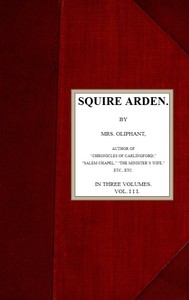
Squire Arden; volume 3 of 3
Written by Mrs. (Margaret) Oliphant
Chaptra reads alongside you — AI insights, chapter breakdowns and reader discussions for every book. Join free
About this book
Reading guide
Themes, characters and key ideas in Squire Arden; volume 3 of 3, written by Chaptra AI.
- about 8 hours
- intermediate
- tense
- dramatic
- social commentary
Squire Arden; volume 3 of 3 concludes Mrs. Oliphant's Victorian novel, delving deeper into the social and personal fallout surrounding Arthur Arden. The narrative opens with a tense confrontation as Arthur faces accusations from Mrs. Pimpernel regarding an accident involving her daughter, Miss Pimpernel, and Jeanie, highlighting his precarious social standing and recent dismissal. As Arthur navigates a future fraught with uncertainty and the repercussions of his past actions, the story explores intricate relationships with his cousins, Edgar and Clare, hinting at unresolved romantic and familial tensions. Themes of reputation, class conflict, and moral responsibility are central, painting a vivid picture of late 19th-century societal pressures and the complex journey towards redemption or ruin.
“"The weight of a ruined name, Arthur, is heavier than any chain, and far less easily broken."”
Key themes
- Reputation and Social Standing
- This theme explores how reputation, once tarnished, can dictate an individual's fate and interactions within Victorian society. Arthur's struggle to clear his name and regain his standing is central, highlighting the fragility of social approval and the severe consequences of perceived misconduct.
- Class Conflict
- The novel delves into the inherent tensions and disparities between different social classes in late 19th-century England. The accident involving Miss Pimpernel (gentry) and Jeanie (implied lower class) likely exposes how justice, sympathy, and opportunities are unequally distributed based on social standing.
- Moral Responsibility and Guilt
- This theme explores the characters' internal struggles with their conscience, the weight of their past actions, and the choices they make in confronting the consequences. Arthur's journey is particularly focused on understanding and accepting his role in the accident and its fallout.
Worth discussing
How does the novel portray the power of reputation and social standing in Victorian society, and how does this compare to modern perceptions?
Chapter-by-chapter breakdowns, character arcs and the full thematic analysis come with a free account.
Discussions
No one has started one yet
Questions this book opens up
No discussions yet
Be the first to start a discussion about this book!
Sign up to start the discussionReviews
No reviews yet
Be the first to review this book!