
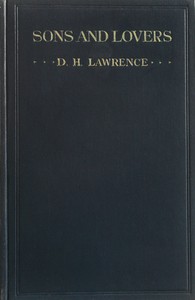
Sons and Lovers
Written by D. H. (David Herbert) Lawrence
Chaptra reads alongside you — AI insights, chapter breakdowns and reader discussions for every book. Join free
About this book
Reading guide
Themes, characters and key ideas in Sons and Lovers, written by Chaptra AI.
- about 15 hours
- advanced
- dark
- introspective
- melancholy
D. H. Lawrence's "Sons and Lovers" is a seminal modernist novel exploring the intense and often destructive emotional ties within the working-class Morel family in early 20th-century Nottinghamshire. The narrative centers on Paul Morel, a sensitive young artist, and his suffocatingly close relationship with his mother, Gertrude, which profoundly impacts his attempts to form romantic attachments with other women, specifically the spiritual Miriam Leivers and the sensual Clara Dawes. Set against the backdrop of industrial hardship and the burgeoning artistic aspirations of its protagonist, the novel delves deep into the psychological complexities of love, desire, and the search for identity. Ultimately, Paul must confront the powerful, almost incestuous bond with his mother to forge his own path, leading to a poignant exploration of liberation and loss.
“"The great mistake people make is to think that a man is going to be made into a woman by a woman, or a woman into a man by a man."”
Key themes
- The Oedipal Complex / Mother-Son Bond
- This is the central psychological theme, exploring the intensely close and often destructive emotional bond between Paul Morel and his mother, Gertrude. Mrs. Morel, disappointed in her husband, transfers her unfulfilled love and ambition onto Paul, creating a suffocating attachment that prevents him from forming successful romantic relationships with other women. Paul is unable to fully separate himself from his mother's emotional orbit, leading to a profound internal conflict and an inability to fully commit to either Miriam or Clara.
- Class Struggle and Social Mobility
- The novel vividly portrays the stark realities of working-class life in an industrial mining community in early 20th-century England. It highlights the limited opportunities, the physical toll of labor, and the social stratification that shapes characters' aspirations and frustrations. Mrs. Morel, from a middle-class background, constantly struggles against the coarseness of her husband and the limitations of her environment, projecting her desire for upward mobility onto her children, particularly Paul's artistic career.
- Love, Sex, and Desire
- Lawrence explores the multifaceted nature of love and desire through Paul's relationships. The novel contrasts different forms of love: the spiritual and intellectual (with Miriam), the sensual and physical (with Clara), and the possessive, almost incestuous maternal love (with Mrs. Morel). It delves into the conflicts between these desires, the societal taboos surrounding sex, and the struggle to achieve a fulfilling, integrated relationship that encompasses both mind and body.
Worth discussing
How does the industrial setting of "The Bottoms" influence the characters' lives and emotional states, particularly Mrs. Morel's disillusionment and Paul's artistic aspirations?
Chapter-by-chapter breakdowns, character arcs and the full thematic analysis come with a free account.
Discussions
No one has started one yet
Questions this book opens up
No discussions yet
Be the first to start a discussion about this book!
Sign up to start the discussionReviews
No reviews yet
Be the first to review this book!