
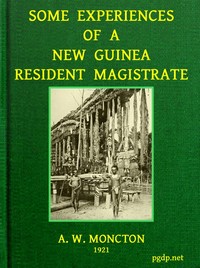
Some Experiences of a New Guinea Resident Magistrate
Written by C. A. W. (Charles Arthur Whitmore) Monckton
Chaptra reads alongside you — AI insights, chapter breakdowns and reader discussions for every book. Join free
About this book
Reading guide
Themes, characters and key ideas in Some Experiences of a New Guinea Resident Magistrate, written by Chaptra AI.
- about 12 hours
- intermediate
- adventurous
- historical
- challenging
C. A. W. Monckton's "Some Experiences of a New Guinea Resident Magistrate" offers a compelling early 20th-century historical account of colonial life in New Guinea. The book chronicles Monckton's adventures and challenges as a young resident magistrate, providing a firsthand perspective on the administration of a largely uncharted territory. It delves into his complex interactions with European traders, government officials, and the diverse indigenous populations, alongside vivid descriptions of the untamed landscape. Through a series of personal anecdotes and reflections, Monckton illuminates the harsh realities, moral ambiguities, and daily intricacies of exercising colonial authority in a remote and demanding environment. The narrative serves as a valuable primary source for understanding the colonial mindset and the practicalities of empire-building in the Pacific.
“The responsibility weighed heavy, for in this wild land, I was often the sole arbiter of justice, a law unto myself.”
Key themes
- Colonialism and Imperial Duty
- The book is fundamentally an exploration of early 20th-century colonialism from the perspective of an active participant. It delves into the practicalities, justifications, and challenges of establishing and maintaining British rule in a remote territory. Monckton's narrative highlights the 'civilizing mission,' the imposition of foreign law and administration, and the complex relationship between the colonizer and the colonized, often reflecting the paternalistic attitudes of the era.
- Cultural Encounter and Misunderstanding
- The narrative is replete with instances of cross-cultural interaction, often leading to misunderstandings, conflict, or moments of profound, albeit limited, insight. Monckton grapples with the customs, languages, and belief systems of diverse indigenous groups, attempting to reconcile them with his own Western framework. The theme explores the difficulties of communication, the clash of different legal and moral codes, and the challenge of truly understanding an 'other' culture.
- The Power and Challenge of the Wilderness
- New Guinea's untamed natural environment is a pervasive and formidable presence throughout the book. It is not merely a backdrop but an active force that shapes the narrative, presenting constant challenges to human endeavor and survival. Monckton's experiences highlight the raw power of nature, its beauty, its dangers (disease, treacherous terrain), and its capacity to humble human ambition, forcing adaptability and resilience.
Worth discussing
How does Monckton's narrative reflect the prevailing attitudes and ideologies of colonialism in the early 20th century?
Chapter-by-chapter breakdowns, character arcs and the full thematic analysis come with a free account.
Discussions
No one has started one yet
Questions this book opens up
No discussions yet
Be the first to start a discussion about this book!
Sign up to start the discussionReviews
No reviews yet
Be the first to review this book!