
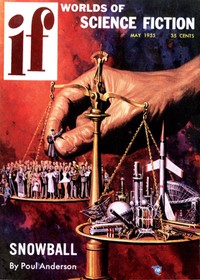
Snowball
Written by Poul Anderson
Chaptra reads alongside you — AI insights, chapter breakdowns and reader discussions for every book. Join free
About this book
Reading guide
Themes, characters and key ideas in Snowball, written by Chaptra AI.
- about 8 hours
- intermediate
- thought-provoking
- dystopian
- hopeful
Poul Anderson's mid-20th century science fiction novel, "Snowball," explores the profound societal and economic ramifications of a revolutionary invention: capacitite, a material discovered by physicist Simon Arch and his wife, Elizabeth, that allows for unprecedented, home-based energy production. This innovation, while promising autonomy, rapidly destabilizes established industries and exacerbates existing class tensions, leading to widespread social unrest. The narrative follows Simon as he grapples with the ethical burden of his creation, which is used for both constructive and destructive purposes amidst the upheaval. Ultimately, the story culminates in a hopeful reflection on human adaptability, as communities rediscover self-sufficiency and navigate the complex possibilities presented by new technologies.
“"The greatest inventions are not those that solve problems, but those that create entirely new ones, forcing humanity to evolve or perish."”
Key themes
- Technological Innovation and Societal Disruption
- The central theme exploring how a single groundbreaking invention can rapidly and profoundly alter societal structures, economic systems, and the daily lives of individuals. It examines the unpredictable and often chaotic cascade of effects that follow radical technological change.
- Individualism vs. Corporate/State Power
- This theme examines the inherent conflict between the autonomy and self-sufficiency granted to individuals by new technologies, and the entrenched power of large corporations and governmental bodies. It questions the legitimacy and sustainability of centralized control in the face of decentralized empowerment.
- Ethical Responsibility of Scientists and Innovators
- The novel delves into the moral obligations faced by those who create powerful technologies. It explores the tension between the pursuit of knowledge and the unforeseeable consequences, forcing the protagonist, Simon Arch, to confront the destructive potential of his benevolent invention.
Worth discussing
How does "Snowball" explore the ethical responsibilities of scientists and innovators? Do you think Simon Arch was ultimately responsible for the chaos?
Chapter-by-chapter breakdowns, character arcs and the full thematic analysis come with a free account.
Discussions
No one has started one yet
Questions this book opens up
No discussions yet
Be the first to start a discussion about this book!
Sign up to start the discussionReviews
No reviews yet
Be the first to review this book!