
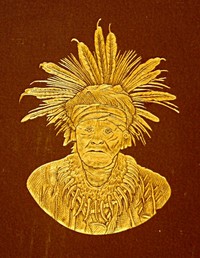
Sixth annual report of the Bureau of ethnology. (1888 N 06 / 1884-1885)
Written by Unknown author
Chaptra reads alongside you — AI insights, chapter breakdowns and reader discussions for every book. Join free
About this book
Reading guide
Themes, characters and key ideas in Sixth annual report of the Bureau of ethnology. (1888 N 06 / 1884-1885), written by Chaptra AI.
- about 15 hours
- advanced
- informative
- academic
- historical
The 'Sixth annual report of the Bureau of Ethnology' for the years 1884-1885, published in 1888, serves as a comprehensive documentation of the Bureau's scientific activities and findings concerning the indigenous peoples of North America. It typically includes an administrative report by the director, John Wesley Powell, detailing the year's progress, alongside several extensive ethnographic monographs and archaeological reports. These detailed studies cover various aspects of Native American cultures, languages, mythologies, and material practices, reflecting the nascent field of American anthropology and the Bureau's mission to systematically record and preserve this knowledge. The report stands as a foundational text in the history of ethnology, showcasing the methodologies and prevailing intellectual frameworks of its era.
“It is the purpose of the Bureau of Ethnology to organize anthropological research among the North American Indians.”
Key themes
- Documentation and Preservation of Indigenous Cultures
- The central mission of the Bureau was to systematically record and preserve information about Native American cultures, languages, and histories, often driven by a belief that these cultures were rapidly disappearing. This theme is evident in every section, from administrative reports detailing fieldwork to specific monographs on tribal customs, myths, and material culture.
- Methodological Foundations of American Anthropology
- The report showcases the nascent methodologies of American ethnology, emphasizing fieldwork, direct observation, linguistic recording, and the collection of material culture. It outlines the practical challenges and strategies involved in conducting research among diverse indigenous populations during a period of significant cultural change.
- Scientific Classification and Evolution
- Reflecting the dominant intellectual currents of the late 19th century, the report often frames its observations within evolutionary theories of human development. Cultures are implicitly or explicitly categorized and compared along a spectrum from 'primitive' to 'civilized,' influencing how indigenous societies are described and understood.
Worth discussing
How do the methodologies employed in this report compare to modern ethnographic research practices?
Chapter-by-chapter breakdowns, character arcs and the full thematic analysis come with a free account.
Discussions
No one has started one yet
Questions this book opens up
No discussions yet
Be the first to start a discussion about this book!
Sign up to start the discussionReviews
No reviews yet
Be the first to review this book!