
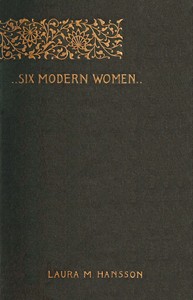
Six modern women: Psychological sketches
Written by Laura Marholm
Chaptra reads alongside you — AI insights, chapter breakdowns and reader discussions for every book. Join free
About this book
Reading guide
Themes, characters and key ideas in Six modern women: Psychological sketches, written by Chaptra AI.
- about 8 hours
- intermediate
- reflective
- analytical
- melancholic
Laura Marholm's "Six Modern Women: Psychological Sketches" is a late 19th-century collection exploring the lives of six influential women, including Sonia Kovalevsky, Marie Bashkirtseff, and Eleonora Duse. Marholm delves beyond their public accomplishments to reveal their profound emotional struggles and the inherent conflicts between their intellectual pursuits and societal expectations for 'womanly instincts.' The work highlights the pervasive loneliness and inner dissatisfaction experienced by these pioneering women, suggesting their successes often came at the cost of personal fulfillment. Through a blend of admiration and pity, Marholm scrutinizes how their true selves were frequently undermined by the constraints of their era, offering a nuanced psychological portrait of the 'modern woman' dilemma.
“Their successes often came at the expense of their inner fulfillment.”
Key themes
- The Modern Woman's Dilemma
- This central theme explores the unique challenges faced by women in the late 19th century who sought to transcend traditional roles. Marholm illustrates how these women were caught between societal expectations for domesticity and their personal aspirations for intellectual, artistic, or professional achievement, often leading to profound internal conflict and a sense of alienation.
- Intellect vs. Emotion (or 'Womanly Instincts')
- Marholm posits a fundamental tension between the intellectual and professional drives of these women and their 'womanly instincts' – often implying a desire for love, family, and emotional connection. This theme examines how the pursuit of one often seemed to necessitate the sacrifice of the other, leading to deep psychological struggles and a sense of incompleteness.
- Societal Expectations vs. Individual Aspirations
- This theme highlights the clash between the rigid societal expectations for women in the late 19th century (e.g., marriage, domesticity, passive roles) and the strong individual aspirations of Marholm's subjects for intellectual, artistic, or professional autonomy. The book illustrates how this conflict often dictated their life choices, personal happiness, and public perception.
Worth discussing
How does Marholm define 'modern woman' in the late 19th century, and how has that definition evolved?
Chapter-by-chapter breakdowns, character arcs and the full thematic analysis come with a free account.
Discussions
No one has started one yet
Questions this book opens up
No discussions yet
Be the first to start a discussion about this book!
Sign up to start the discussionReviews
No reviews yet
Be the first to review this book!