
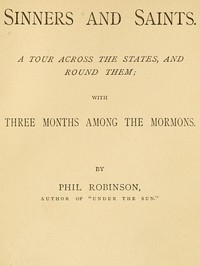
Sinners and Saints: A Tour Across the States and Round Them, with Three Months Among the Mormons
Written by Phil Robinson
Chaptra reads alongside you — AI insights, chapter breakdowns and reader discussions for every book. Join free
About this book
Reading guide
Themes, characters and key ideas in Sinners and Saints: A Tour Across the States and Round Them, with Three Months Among the Mormons, written by Chaptra AI.
- about 10 hours
- intermediate
- observational
- humorous
- insightful
Phil Robinson's "Sinners and Saints" is a late 19th-century travel narrative documenting his extensive journey across the United States, with a significant portion dedicated to his observations of the Mormon community. Beginning with a train journey from New York to Chicago, Robinson offers keen insights into the American landscape, burgeoning towns, and the character of its people, blending humorous anecdotes with socio-cultural critiques. The book explores themes of American identity, frontier development, and the contrasts between nature and civilization, as seen through the eyes of a discerning British observer. His narrative provides a valuable historical snapshot of a nation in flux, reflecting on both the virtues and vices he encounters across the diverse states and among the unique society of the Mormons.
“One cannot but marvel at the sheer audacity of man to carve such a civilization from the very teeth of the wilderness, though often at the expense of its pristine beauty.”
Key themes
- American Identity and Frontier Development
- This theme explores how the United States was forging its national character during a period of rapid westward expansion and industrialization. Robinson observes the blend of rugged individualism and community building, the development of towns from wilderness outposts, and the diverse regional identities contributing to a nascent national identity.
- Cultural Observation and 'Othering'
- Robinson's narrative is fundamentally an act of cultural observation, particularly highlighted during his three months among the Mormons. This theme delves into how an outsider perceives and interprets different cultures, leading to insights but also potentially to 'othering' – highlighting differences in a way that emphasizes foreignness or peculiarity, even when attempting impartiality.
- Nature vs. Civilization
- This theme is explored through Robinson's observations of the American landscape, contrasting the untouched natural beauty of the continent with the encroaching signs of human settlement and industrialization. It reflects a common 19th-century concern about the impact of progress on the environment and the human spirit.
Worth discussing
How does Robinson's British perspective shape his observations of American culture and society in the late 19th century?
Chapter-by-chapter breakdowns, character arcs and the full thematic analysis come with a free account.
Discussions
No one has started one yet
Questions this book opens up
No discussions yet
Be the first to start a discussion about this book!
Sign up to start the discussionReviews
No reviews yet
Be the first to review this book!