
About this book
Reading guide
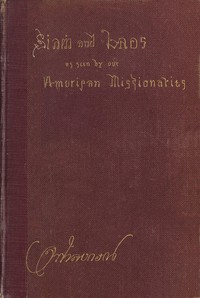
Themes, characters and key ideas in Siam and Laos, as Seen by Our American Missionaries, written by Chaptra AI.
- about 9 hours
- advanced
- informative
- earnest
- didactic
Siam and Laos, as Seen by Our American Missionaries is a non-fiction compilation likely offering first-hand accounts, letters, and reports from American Protestant missionaries stationed in late 19th or early 20th century Siam (Thailand) and Laos. The book provides a unique window into the daily lives, challenges, and cultural observations of these missionaries, detailing their efforts to evangelize, establish schools, and provide medical care amidst unfamiliar customs and often resistant populations. It serves as both a historical document of the missionary movement and a reflection of Western perceptions of Southeast Asian cultures during a period of significant colonial influence and religious expansion, often highlighting the perceived 'need' for conversion and the 'progress' of Christianity.
“"The spiritual darkness that envelops these lands is profound, yet the light of the Gospel, however feebly shone, has begun to penetrate the deepest shadows."”
Key themes
- Religious Conversion and Proselytization
- The central driving force of the entire book. It meticulously documents the missionaries' efforts to convert the local populations to Christianity, detailing strategies, successes, failures, and the theological justifications for their work. The narrative constantly emphasizes the spiritual 'darkness' of the region and the urgent need for the Gospel.
- Cultural Encounter and Imperialism
- The book serves as a record of the clash and interaction between Western missionary culture and the indigenous cultures of Siam and Laos. It highlights the missionaries' observations of local customs, social structures, and religious practices, often through a lens of judgment and a desire for 'improvement.' This encounter is deeply embedded within the broader context of Western imperialism and the 'civilizing mission' of the era.
- The 'Othering' of Non-Western Cultures
- This theme is a critical undercurrent, revealing how the missionaries, despite their earnest intentions, often perceived and presented the Siamese and Lao people as fundamentally different and inferior, requiring external intervention. Their narratives frequently categorize indigenous people based on stereotypes and religious differences, reinforcing a binary of 'us' (enlightened, Christian) and 'them' (superstitious, heathen).
Worth discussing
How do the missionaries' observations reflect the prevailing Western attitudes towards non-Western cultures during the late 19th and early 20th centuries?
Chapter-by-chapter breakdowns, character arcs and the full thematic analysis come with a free account.
Discussions
No one has started one yet
Questions this book opens up
No discussions yet
Be the first to start a discussion about this book!
Sign up to start the discussionReviews
No reviews yet
Be the first to review this book!