
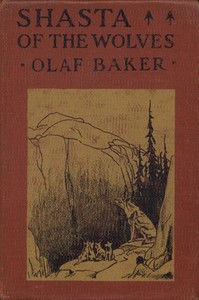
Shasta of the Wolves
Written by Olaf Baker
Chaptra reads alongside you — AI insights, chapter breakdowns and reader discussions for every book. Join free
About this book
Reading guide
Themes, characters and key ideas in Shasta of the Wolves, written by Chaptra AI.
- about 8 hours
- intermediate
- Wild
- Instinctual
- Exploratory
Olaf Baker's "Shasta of the Wolves" is a compelling early 20th-century novel chronicling the extraordinary life of Shasta, a human child adopted and raised by a wolf family in the wilderness. The narrative begins with the she-wolf Nitka discovering the abandoned infant, integrating him into her litter, and teaching him the harsh yet beautiful laws of the wild. As Shasta matures, he grapples with a dual identity, torn between his human instincts and his learned wolf behaviors. The story delves deep into themes of belonging, survival, and the profound connection between species, culminating in Shasta's journey to understand his unique place in both the animal and human worlds.
“The Law of the Wild is simple, Shasta: hunt or be hunted, but always with respect.”
Key themes
- Identity and Belonging
- This is the central theme, exploring Shasta's struggle to define who he is when raised between two distinct worlds. He is human by birth but wolf by upbringing, leading to an internal conflict about where he truly belongs and what constitutes his 'self.' The theme questions whether identity is inherent or learned, and how one reconciles conflicting aspects of their being.
- Nature vs. Nurture
- The novel deeply examines whether Shasta's 'humanity' is an innate quality that will eventually surface, or if his wolf upbringing has fundamentally shaped his character and instincts. It probes the power of environment and early experiences in shaping an individual's skills, values, and even their very essence, challenging the idea of inherent species-specific traits.
- Survival and Adaptation
- The harsh realities of wilderness survival are a constant backdrop, showcasing the ingenuity, resilience, and instinct required to live in harmony with, and sometimes against, the natural world. Shasta's ability to adapt to the wolves' way of life, learning to hunt, avoid danger, and endure the elements, highlights the universal drive for survival and the remarkable adaptability of living beings.
Worth discussing
How does Shasta's upbringing by wolves challenge traditional notions of 'humanity' and 'civilization'?
Chapter-by-chapter breakdowns, character arcs and the full thematic analysis come with a free account.
Discussions
No one has started one yet
Questions this book opens up
No discussions yet
Be the first to start a discussion about this book!
Sign up to start the discussionReviews
No reviews yet
Be the first to review this book!