
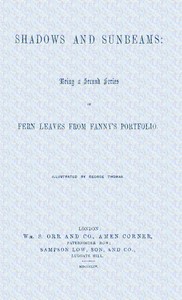
Shadows and sunbeams: Being a second series of Fern leaves from Fanny's portfolio
Written by Fanny Fern
Chaptra reads alongside you — AI insights, chapter breakdowns and reader discussions for every book. Join free
About this book
Reading guide
Themes, characters and key ideas in Shadows and sunbeams: Being a second series of Fern leaves from Fanny's portfolio, written by Chaptra AI.
- about 8 hours
- intermediate
- poignant
- reflective
- sentimental
Fanny Fern's "Shadows and Sunbeams" is a mid-19th-century collection that blends poignant essays and reflections on everyday life and societal norms with a compelling narrative thread featuring Hetty, a young woman grappling with profound loss and dependence. The book explores Hetty's internal world as she navigates a harsh domestic situation under an unkind uncle, contrasting her present struggles with the cherished memories of her loving childhood. Through a mix of humor and pathos, Fern illuminates the emotional burdens of gratitude and servitude, while introducing the enigmatic schoolmaster, Mr. Grey, whose arrival promises a potential turning point for Hetty's yearning for affection and purpose. It serves as a window into the societal constraints and personal resilience characteristic of the era, all delivered through Fern's distinctive, sharp-witted yet empathetic voice.
“"The heart, like a shadowed room, aches for the sunbeam that will pierce its gloom, yet fears the very light that reveals its dust."”
Key themes
- Dependence vs. Independence
- This theme is central to Hetty's narrative, exploring the psychological and emotional toll of financial and social dependence, particularly for women in the 19th century. It contrasts the bitterness of forced servitude with the yearning for self-sufficiency and autonomy.
- Memory and Loss
- The theme of memory serves as both a comfort and a torment for Hetty, highlighting the profound impact of past experiences on present suffering. Her recollections of a blissful childhood and a loving father provide solace but also amplify the pain of her current reality of loss and emotional deprivation.
- The Plight of Women/Domesticity
- Fern uses Hetty's story and likely other essays to critique the limited options and often oppressive conditions faced by women in 19th-century domestic life. It highlights the lack of agency, the emotional labor expected, and the vulnerability of women without independent means.
Worth discussing
Discuss the blend of essays and narrative in the book. How does this structure enhance or detract from the overall reading experience?
Chapter-by-chapter breakdowns, character arcs and the full thematic analysis come with a free account.
Discussions
No one has started one yet
Questions this book opens up
No discussions yet
Be the first to start a discussion about this book!
Sign up to start the discussionReviews
No reviews yet
Be the first to review this book!