
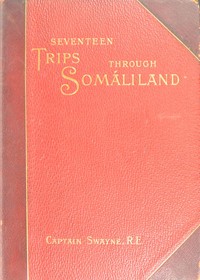
Seventeen trips through Somáliland: A record of exploration & big game shooting, 1885 to 1893
Written by H. G. C. (Harald G. C.) Swayne
Chaptra reads alongside you — AI insights, chapter breakdowns and reader discussions for every book. Join free
About this book
Reading guide
Themes, characters and key ideas in Seventeen trips through Somáliland: A record of exploration & big game shooting, 1885 to 1893, written by Chaptra AI.
- about 10 hours
- intermediate
- Adventurous
- Informative
- Historical
H. G. C. Swayne's "Seventeen Trips Through Somáliland" is a late 19th-century non-fiction account chronicling the author's extensive explorations and big game hunting expeditions in the Somali Coast Protectorate between 1885 and 1893. The book serves as a detailed record of the region's unique geography, diverse wildlife, and the customs and social structures of the local nomadic Somali tribes. Beyond its function as a guide for contemporary sportsmen and travelers, it offers valuable ethnographic and natural history observations from a colonial perspective. Swayne's narrative provides a window into the motivations and methods of British exploration during the height of the scramble for Africa, blending adventure with meticulous documentation.
“The vast, untamed expanse of Somáliland presented itself as a canvas for discovery, beckoning the adventurous spirit to chart its secrets.”
Key themes
- Exploration and Discovery
- The central theme, driving Swayne's entire endeavor. The book is a testament to the human urge to venture into the unknown, to map, to document, and to understand previously uncharted territories. It highlights the spirit of adventure characteristic of the late 19th century, when much of the world was still 'discovered' by European powers.
- Colonialism and Empire
- Inherent to the book's context, this theme underscores the British presence in Somáliland and the broader 'Scramble for Africa.' Swayne's expeditions are implicitly (and sometimes explicitly) tied to extending British influence, understanding resources, and documenting populations within the sphere of the British Empire. The narrative reflects the attitudes of a colonial power towards indigenous peoples and 'unclaimed' lands.
- Human-Nature Relationship: Hunting and Observation
- This theme explores the dual aspects of Swayne's engagement with the natural world: the pursuit of big game for sport and trophies, and the meticulous scientific observation of wildlife and ecosystems. It reflects a historical period where these two activities were often intertwined, with hunting serving as a means to access and study remote environments, while also contributing to the romanticized image of the 'great white hunter.'
Worth discussing
Discuss the motivations behind European exploration and big game hunting in late 19th-century Africa. How do these motivations reflect the imperialistic attitudes of the time?
Chapter-by-chapter breakdowns, character arcs and the full thematic analysis come with a free account.
Discussions
No one has started one yet
Questions this book opens up
No discussions yet
Be the first to start a discussion about this book!
Sign up to start the discussionReviews
No reviews yet
Be the first to review this book!