
About this book
Reading guide
Themes, characters and key ideas in Selected Essays of Plutarch, Vol. I., written by Chaptra AI.
- about 8 hours
- advanced
- Philosophical
- Didactic
- Reflective
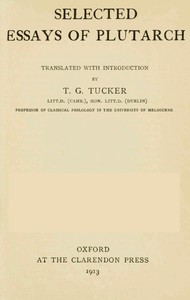
Selected Essays of Plutarch, Vol. I presents a foundational collection of philosophical writings from the early second century AD, compiled and translated by T. G. Tucker. This volume serves as a moral guide, delving into themes of ethics, education, and social conduct through a series of didactic essays. Plutarch's overarching aim is to instruct readers in the cultivation of a virtuous life, offering timeless wisdom applicable to the moral landscape of his era and beyond. The collection is framed by a preface and introduction that establish historical context and Plutarch's philosophical credentials. It offers invaluable insights into the daily lives and moral considerations of the middle classes around 100 AD, showcasing a range of engaging topics from civic duty to an allegorical dinner party featuring the Seven Sages of Greece.
“The mind is not a vessel to be filled, but a fire to be kindled.”
Key themes
- Virtue and Ethics
- This is the cornerstone of Plutarch's philosophy. He explores various virtues (e.g., justice, temperance, courage, prudence) not as abstract concepts but as actionable principles for daily living. The essays provide practical guidance on how to cultivate a virtuous character, make ethical decisions, and contribute positively to society, emphasizing the connection between inner moral state and outward behavior.
- Education and Paideia
- Plutarch places immense value on education (paideia), seeing it not merely as the acquisition of knowledge but as the holistic development of a person's character and intellect. He discusses methods of instruction, the role of parents and teachers, and the importance of instilling moral values from a young age, arguing that proper education is fundamental to producing virtuous citizens.
- Wisdom and Practical Philosophy
- Beyond theoretical knowledge, Plutarch champions practical wisdom—the ability to apply philosophical principles to real-life situations. His essays are designed to be guides for living, offering insights into human nature, the pursuit of happiness, and the means to navigate life's challenges with composure and reason. The allegorical dinner with the Seven Sages exemplifies this theme.
Worth discussing
How do Plutarch's ideas on 'virtue' align with or diverge from modern understandings of morality?
Chapter-by-chapter breakdowns, character arcs and the full thematic analysis come with a free account.
Discussions
No one has started one yet
Questions this book opens up
No discussions yet
Be the first to start a discussion about this book!
Sign up to start the discussionReviews
No reviews yet
Be the first to review this book!