
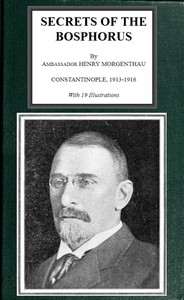
Secrets of the Bosphorus
Written by Henry Morgenthau
Chaptra reads alongside you — AI insights, chapter breakdowns and reader discussions for every book. Join free
About this book
Reading guide
Themes, characters and key ideas in Secrets of the Bosphorus, written by Chaptra AI.
- about 10 hours
- advanced
- Historical
- Political
- Somber
Henry Morgenthau's "Secrets of the Bosphorus" offers a compelling first-hand account of his tenure as the American ambassador to the Ottoman Empire from 1913 to 1916. The book chronicles the escalating German influence in Turkey, the political intrigues within the Ottoman government, and the broader geopolitical machinations that precipitated World War I. Morgenthau provides a candid perspective on key figures like German Ambassador Baron Wangenheim and Turkish leaders Talaat and Enver, highlighting the Young Turks' descent from reformist ideals to oppressive rule. His narrative serves as a vital historical document, detailing the tumultuous period and chillingly foreshadowing the tragic fate of ethnic minorities, particularly the Armenians.
“The Bosphorus, a narrow strait, became the stage for a grander game of empires, where the destinies of nations were subtly, often treacherously, decided.”
Key themes
- Imperialism and Geopolitical Power Struggles
- The book vividly illustrates the intense competition among European powers, particularly Germany, for influence over the declining Ottoman Empire. It details how Germany strategically infiltrated Ottoman political and military structures to secure its interests and expand its sphere of influence, ultimately drawing Turkey into World War I. This theme explores the mechanisms of imperial ambition and its devastating global consequences.
- The Nature of Power and Tyranny
- Morgenthau meticulously documents the Young Turks' descent from a movement promising democracy and reform into an authoritarian regime marked by violence and oppression. The book explores how absolute power corrupts, focusing on how leaders like Talaat and Enver, driven by a mix of nationalism and personal ambition, consolidate power and justify increasingly brutal actions against their own populace.
- The Perils of Nationalism and Ethnic Conflict
- Morgenthau's narrative, while focused on political intrigue, subtly but powerfully builds towards the catastrophic consequences of extreme nationalism. The book foreshadows the tragic fate of various ethnic groups within the Ottoman Empire, particularly the Armenians, as the Young Turks' pan-Turkic and Ottomanist ideologies harden into a policy of ethnic cleansing. It serves as a stark warning about the destructive potential of identity politics when fueled by fear and hatred.
Worth discussing
Discuss the nature of diplomatic influence: How did German Ambassador Wangenheim manage to exert such significant control over the Ottoman government?
Chapter-by-chapter breakdowns, character arcs and the full thematic analysis come with a free account.
Discussions
No one has started one yet
Questions this book opens up
No discussions yet
Be the first to start a discussion about this book!
Sign up to start the discussionReviews
No reviews yet
Be the first to review this book!