
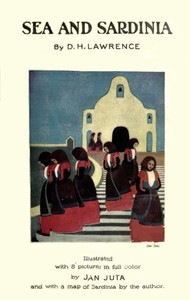
Sea and Sardinia
Written by D. H. (David Herbert) Lawrence
Chaptra reads alongside you — AI insights, chapter breakdowns and reader discussions for every book. Join free
About this book
Reading guide
Themes, characters and key ideas in Sea and Sardinia, written by Chaptra AI.
- about 8 hours
- intermediate
- Exploratory
- Reflective
- Sensory
D. H. Lawrence's "Sea and Sardinia" is a vivid travel narrative chronicling the author's escape from Sicily to the then-unspoiled island of Sardinia in the early 20th century. Driven by a profound restlessness and a desire for an untamed, less civilized experience, Lawrence embarks on a journey that combines detailed observations of landscape and local culture with deep personal reflection. The book explores themes of freedom, the allure of the primitive, and the contrast between ancient ways of life and the encroaching modern world. Through his distinctive sensory prose, Lawrence captures the essence of his travels, offering a unique blend of ethnographic observation and philosophical introspection on the human condition.
“One gets tired of the world. One gets tired of the world and its people. One gets tired of it all. One wants to go away, to be alone, to be free.”
Key themes
- Escape and Freedom
- Central to the narrative, Lawrence's journey is a conscious flight from the perceived staleness and over-civilization of Sicily and, by extension, modern European society. He seeks a raw, unburdened existence, a sense of personal liberation from societal constraints and intellectual fatigue. Sardinia represents a geographical and spiritual refuge, a place where he hopes to reconnect with a more elemental sense of self and vital energy.
- Nature vs. Civilization
- This is a recurring theme in Lawrence's work, and in "Sea and Sardinia," it is explored through the contrast between the 'civilized' world he leaves behind and the 'untamed' world he seeks. Lawrence often idealizes nature and 'primitive' cultures, believing they hold a vital force that modern civilization has lost. He critiques the artificiality, intellectualism, and spiritual emptiness he associates with contemporary society.
- Sensory Experience and Vitalism
- Lawrence's writing is deeply rooted in sensory experience. He emphasizes the importance of immediate, physical engagement with the world as a pathway to genuine understanding and a vibrant existence, a concept he often termed 'blood consciousness.' He meticulously records sights, sounds, smells, tastes, and tactile sensations, believing that true life is lived through the senses rather than purely through intellect. His journey to Sardinia is an attempt to immerse himself in such a vital, sensory-rich environment.
Worth discussing
How does Lawrence's personal restlessness drive his journey, and does he find the 'escape' he seeks in Sardinia?
Chapter-by-chapter breakdowns, character arcs and the full thematic analysis come with a free account.
Discussions
No one has started one yet
Questions this book opens up
No discussions yet
Be the first to start a discussion about this book!
Sign up to start the discussionReviews
No reviews yet
Be the first to review this book!