
About this book
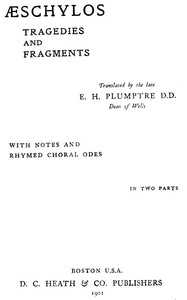
"Æschylos Tragedies and Fragments" by Aeschylus is a collection of ancient Greek tragedies written in the 5th century BC. The volume includes translations of several of Aeschylus's surviving works, such as "The Persians," "The Seven Who Fought Against Thebes," and "Prometheus Bound," along with some of his fragments. The plays often explore themes of fate, divine justice, and human suffering, showcasing the grandeur and complexity of Aeschylus's dramatic storytelling. At the start of "The Persians," the Chorus of Persian Elders gathers in Susa, anxiously awaiting news of the Persian army that Xerxes has led against Hellas. They express profound concern for their king and fellow warriors as they recount the might of their forces and the ominous silence that follows their departure. The opening sets a tone of impending doom, foreshadowing the tragic fate awaiting the Persian legions after their encounter with the Greeks at Salamis. As the narrative unfolds, Atossa, Xerxes' mother, enters to express her fears and recount troubling dreams, reflecting the gravity of the situation and the emotional weight of the impending disaster.
Reading guide
Themes, characters and key ideas in Æschylos Tragedies and Fragments, written by Chaptra AI.
A reading guide for this book hasn't been written yet. Chaptra builds one the first time a reader opens it.
Chapter-by-chapter breakdowns, character arcs and the full thematic analysis come with a free account.
Discussions
No one has started one yet
No discussions yet
Be the first to start a discussion about this book!
Sign up to start the discussionReviews
No reviews yet
Be the first to review this book!