
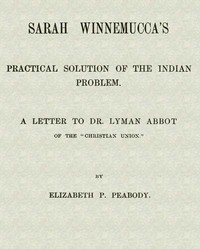
Sarah Winnemucca's Practical Solution of the Indian Problem: A Letter to Dr. Lyman Abbot of the "Christian Union"
Written by Elizabeth Palmer Peabody
Chaptra reads alongside you — AI insights, chapter breakdowns and reader discussions for every book. Join free
About this book
Reading guide
Themes, characters and key ideas in Sarah Winnemucca's Practical Solution of the Indian Problem: A Letter to Dr. Lyman Abbot of the "Christian Union", written by Chaptra AI.
- about 3 hours
- intermediate
- Advocative
- Historical
- Challenging
Elizabeth P. Peabody's "Sarah Winnemucca's Practical Solution of the Indian Problem" is a significant late 19th-century document that champions the pioneering efforts of Sarah Winnemucca, a Northern Paiute advocate for her people. The work, framed as a letter to Dr. Lyman Abbot, details Winnemucca's vision for empowering Native Americans through self-developed education, contrasting her empathetic approach with the often harsh methods prevalent in government-run reservations. Peabody highlights Winnemucca's establishment of a school for Paiute children, emphasizing her belief in preserving tribal identity and dignity while engaging with Western civilization. Despite facing considerable opposition from government agents and broader societal challenges, the book underscores Winnemucca's unwavering determination to uplift her community and foster hope for their future, offering a practical, Indigenous-led solution to the so-called 'Indian Problem.'
“"The only practical solution is to give the Indian self-help through education, an education that respects their inherent dignity and tribal identity."”
Key themes
- Education as Empowerment and Self-Determination
- This theme is central to the book, showcasing Sarah Winnemucca's belief that culturally relevant education, led by Indigenous people, is the most effective means for Native Americans to achieve self-sufficiency, preserve their identity, and navigate interactions with white society on their own terms. It contrasts sharply with the forced assimilation prevalent in government-run schools.
- Cultural Preservation vs. Assimilation
- The book explores the tension between maintaining Indigenous cultural heritage and adapting to the dominant white culture. Winnemucca advocates for a path that allows her people to engage with Western civilization without sacrificing their distinct identity, challenging the prevailing notion that Native Americans must assimilate entirely to 'progress.'
- Advocacy and Intercultural Communication
- The book itself is an act of advocacy, highlighting Winnemucca's extensive efforts to communicate the needs and perspectives of her people to white audiences and government officials. It also demonstrates the role of allies, like Peabody, in bridging cultural divides and amplifying marginalized voices to effect change.
Worth discussing
How does Winnemucca's vision for education differ from the prevailing assimilationist policies of the late 19th century, and what are the long-term implications of these differing approaches?
Chapter-by-chapter breakdowns, character arcs and the full thematic analysis come with a free account.
Discussions
No one has started one yet
Questions this book opens up
No discussions yet
Be the first to start a discussion about this book!
Sign up to start the discussionReviews
No reviews yet
Be the first to review this book!