
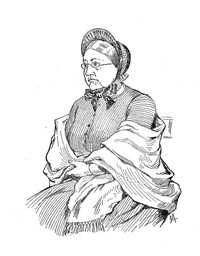
Samantha Among the Brethren, Complete
Written by Marietta Holley
Chaptra reads alongside you — AI insights, chapter breakdowns and reader discussions for every book. Join free
About this book
Read it with a club
Small groups reading the same books and talking as they go.


News
- 4 members
- 1,813 discussions
- Active Sep 11
Read Samantha Among the Brethren, Complete alongside people who are reading it too.
Also here: News Bulletin, Just Joking....
Chaptra Prime — paid clubs, every club feature, and unlimited reading support, for $5 a month or $60 once.
See PrimeReading guide
Themes, characters and key ideas in Samantha Among the Brethren, Complete, written by Chaptra AI.
- about 8 hours
- intermediate
- humorous
- satirical
- insightful
Marietta Holley's "Samantha Among the Brethren, Complete" is a late 19th-century satirical novel that chronicles the spirited Samantha's efforts to challenge traditional gender roles, particularly within the context of church leadership and societal expectations. Through witty dialogues with her traditional husband, Josiah Allen, Samantha passionately advocates for women's rights and their rightful place in religious and public spheres, employing logic, humor, and biblical references. The narrative primarily focuses on her attempt to gain women's admission to church conferences, exposing the inherent biases and absurdities of male-dominated institutions. The book serves as both a humorous domestic comedy and a sharp social commentary on the burgeoning women's empowerment movement of its era, all while maintaining Samantha's determined spirit.
“"The Lord didn't make women with tongues just to keep 'em tied when there's truth to be spoken in His house."”
Key themes
- Women's Rights and Suffrage
- This is the central theme of the novel, directly addressing the late 19th-century movement for women's political, social, and religious equality. Samantha's arguments for women's inclusion in church conferences are a metaphor for the broader fight for suffrage and equal opportunities in all public spheres. The novel champions the idea that women are intellectually and spiritually capable of contributing to society beyond the domestic realm.
- Religious Hypocrisy and Reform
- Holley critiques the hypocrisy within religious institutions that preach universal love and equality while simultaneously excluding women from leadership and decision-making roles. Samantha often points out the inconsistencies between Christian doctrine and the practices of the 'brethren,' advocating for a more inclusive and just interpretation of faith.
- Gender Roles and Expectations
- The novel meticulously explores the rigid gender roles and expectations placed upon men and women in the late 19th century. Samantha challenges the notion that women's natural sphere is exclusively domestic and argues for their right to participate fully in public, intellectual, and spiritual life, dismantling stereotypes about female emotionality and intellectual capacity.
Worth discussing
How does Marietta Holley use humor and satire to advance serious arguments about women's rights in the novel?
Chapter-by-chapter breakdowns, character arcs and the full thematic analysis come with a free account.
Discussions
No one has started one yet
Questions this book opens up
No discussions yet
Be the first to start a discussion about this book!
Sign up to start the discussionReviews
No reviews yet
Be the first to review this book!