
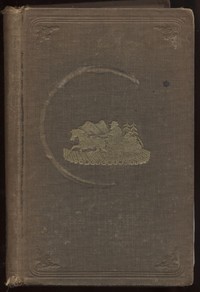
Roughing It
Written by Mark Twain
Chaptra reads alongside you — AI insights, chapter breakdowns and reader discussions for every book. Join free
About this book
Read it with a club
Small groups reading the same books and talking as they go.


News
- 4 members
- 1,813 discussions
- Active Sep 11
Read Roughing It alongside people who are reading it too.
Also here: News Bulletin, Just Joking....
Chaptra Prime — paid clubs, every club feature, and unlimited reading support, for $5 a month or $60 once.
See PrimeReading guide
Themes, characters and key ideas in Roughing It, written by Chaptra AI.
- about 18 hours
- intermediate
- Humorous
- Adventurous
- Satirical
Mark Twain's "Roughing It" is a semi-autobiographical travelogue chronicling his adventures across the American West and to the Sandwich Islands (Hawaii) during the 1860s. Beginning with his naive journey by stagecoach to Nevada Territory as a secretary, the narrative vividly details his comical failures in silver mining, his brief foray into timber speculation, and his eventual transformation into a successful journalist in Virginia City. Blending factual accounts with characteristic exaggeration and humor, Twain offers a captivating, if often satirical, glimpse into the wild spirit, colorful characters, and unique challenges of the American frontier. The book serves as both a historical record of a pivotal era and a crucial document of Twain's own development as a writer and humorist.
“I was a very green tenderfoot, and it was hard for me to get my bearings.”
Key themes
- The American West and Frontier Life
- This theme explores the realities, myths, and challenges of living in the post-Gold Rush American West. Twain vividly depicts its vastness, harshness, the immense opportunities for wealth, and the unique, often lawless, society it fostered, frequently contrasting it with the perceived order of Eastern civilization. It's a critical examination of Manifest Destiny and the human impact on the landscape.
- The Pursuit of Wealth and Disillusionment
- A central driving force for many characters, including Twain himself, is the dream of striking it rich, particularly through silver mining. The book often humorously, and sometimes poignantly, depicts the futility, moral compromises, and ultimate disillusionment associated with these get-rich-quick schemes, highlighting the gap between expectation and reality.
- The Art of Storytelling and Humor
- Twain constantly employs hyperbole, irony, satire, and tall tales, reflecting on the nature of truth, memory, and narrative itself. The book is a meta-commentary on how stories are constructed, embellished, and used to make sense of experience, and how humor can be a powerful tool for both entertainment and social critique, often blurring the lines between fact and fiction.
Worth discussing
How does Twain use humor, hyperbole, and satire to both celebrate and critique the American West and its inhabitants?
Chapter-by-chapter breakdowns, character arcs and the full thematic analysis come with a free account.
Discussions
No one has started one yet
Questions this book opens up
No discussions yet
Be the first to start a discussion about this book!
Sign up to start the discussionReviews
No reviews yet
Be the first to review this book!