
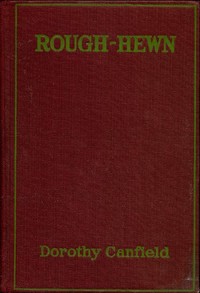
Rough-Hewn
Written by Dorothy Canfield Fisher
Chaptra reads alongside you — AI insights, chapter breakdowns and reader discussions for every book. Join free
About this book
Reading guide
Themes, characters and key ideas in Rough-Hewn, written by Chaptra AI.
- about 10 hours
- intermediate
- reflective
- social commentary
- coming-of-age
Dorothy Canfield Fisher's "Rough-Hewn" is an early 20th-century coming-of-age novel centered on Neale Crittenden, a ten-year-old boy navigating the social complexities of Union Hill. Initially enjoying the simple pleasures of boyhood, Neale's world soon expands to reveal the stark realities of class disparity and the quiet tensions within his own family. The narrative traces his journey from childhood innocence to a deeper understanding of himself and his place in society, exploring themes of identity formation and the impact of societal expectations. Through Neale's experiences, the novel offers a poignant look at the challenges of adolescence and the subtle forces that shape an individual's character.
“"He owned a new shinny stick, and the world was good."”
Key themes
- Childhood Innocence and Its Loss
- This theme explores the gradual erosion of Neale's naive worldview as he confronts the harsh realities of life. His journey from a carefree boy to one aware of societal complexities represents the universal experience of growing up and losing the protective shield of childhood.
- Class Disparity and Social Inequality
- The novel vividly portrays the stark contrast between the affluent and struggling families in Union Hill, examining how socio-economic status dictates opportunities, shapes experiences, and influences personal identity. It critiques the inherent unfairness of such systems.
- The Formation of Personal Identity
- Neale's journey is fundamentally one of self-discovery, as he grapples with who he is, who he wants to be, and how he fits into his family and society. His identity is 'rough-hewn' by his experiences, challenges, and observations.
Worth discussing
How does the novel portray the transition from childhood innocence to a more complex understanding of the world?
Chapter-by-chapter breakdowns, character arcs and the full thematic analysis come with a free account.
Discussions
No one has started one yet
Questions this book opens up
No discussions yet
Be the first to start a discussion about this book!
Sign up to start the discussionReviews
No reviews yet
Be the first to review this book!