
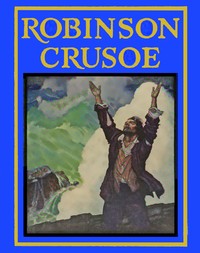
Robinson Crusoe
Written by Daniel Defoe
Chaptra reads alongside you — AI insights, chapter breakdowns and reader discussions for every book. Join free
About this book
Reading guide
Themes, characters and key ideas in Robinson Crusoe, written by Chaptra AI.
- about 8 hours
- intermediate
- adventurous
- isolating
- resourceful
Daniel Defoe's "Robinson Crusoe" chronicles the harrowing experiences of its titular protagonist, a young Englishman who, against his father's advice, embarks on a life at sea driven by a thirst for adventure and profit. After numerous misadventures and shipwrecks, Crusoe finds himself the sole survivor on a remote, uninhabited island off the coast of South America, where he spends twenty-eight years in solitary struggle. The novel meticulously details his extraordinary efforts to survive, build a rudimentary civilization, and grapple with his spiritual and psychological transformation. It is a foundational work of English literature, exploring themes of human resilience, resourcefulness, colonialism, and the complex relationship between humanity and nature, ultimately culminating in his eventual rescue and return to society.
“"Thus, in a moment, I saw all my hopes of going to sea vanish, and all my father's good advice, and my mother's tears, and entreaties, and my own vows, made all in vain."”
Key themes
- Survival and Resourcefulness
- This is the central theme, exploring Crusoe's extraordinary ingenuity and perseverance in the face of extreme isolation and lack of resources. The novel meticulously details his practical efforts to build shelter, find food, make tools, and establish a functional existence on the deserted island, highlighting the human capacity for adaptation and problem-solving.
- Colonialism and Empire
- The novel reflects and, in some ways, champions the imperialist mindset of Defoe's era. Crusoe effectively 'colonizes' his island, asserting dominion over its resources and eventually over its native inhabitants (Friday). His actions, such as naming the island 'my island' and 'civilizing' Friday, illustrate the European belief in their right to exploit foreign lands and cultures.
- The Human Condition / Isolation
- The novel provides a stark examination of the psychological and emotional impact of prolonged solitude. Crusoe's initial despair, his struggle with loneliness, and his eventual adaptation highlight the fundamental human need for companionship, communication, and a sense of belonging within a social structure.
Worth discussing
How does Crusoe's character evolve throughout his time on the island? What internal and external forces drive his transformation?
Chapter-by-chapter breakdowns, character arcs and the full thematic analysis come with a free account.
Discussions
No one has started one yet
Questions this book opens up
No discussions yet
Be the first to start a discussion about this book!
Sign up to start the discussionReviews
No reviews yet
Be the first to review this book!