
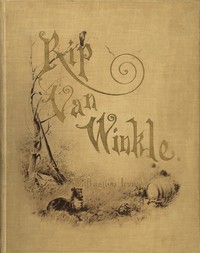
Rip Van Winkle
Written by Washington Irving
Chaptra reads alongside you — AI insights, chapter breakdowns and reader discussions for every book. Join free
About this book
Reading guide
Themes, characters and key ideas in Rip Van Winkle, written by Chaptra AI.
- about 8 hours
- intermediate
- mysterious
- humorous
- nostalgic
Washington Irving's "Rip Van Winkle" is a foundational American short story that blends folklore with a keen observation of societal change. It recounts the fantastical tale of Rip, a good-natured but indolent villager who, seeking escape from his shrewish wife, wanders into the Kaatskill Mountains and encounters mysterious figures. After drinking with them, he falls into a twenty-year slumber, only to awaken to a dramatically transformed post-Revolutionary War America, where his identity and the world he knew are utterly lost. The narrative poignantly explores themes of the inexorable passage of time, the challenges of adapting to change, and the pursuit of individual freedom amidst evolving national identity, ultimately establishing itself as a cornerstone of American literature.
“A tart temper never mellows with age, and a sharp tongue is the only edged tool that grows keener with constant use.”
Key themes
- Change and the Passage of Time
- This is the central theme, explored through Rip's twenty-year slumber. The story dramatically illustrates how time relentlessly marches on, bringing about profound changes in society, politics, and personal lives. Rip awakens to a world where everything, from the village's appearance to its political allegiance, has transformed beyond recognition, highlighting the inevitability and often disorienting nature of change.
- Identity and Belonging
- Rip's return to a world where he is unrecognized and his past self is forgotten raises fundamental questions about identity. What defines a person when their context, relationships, and even their nation have changed? Rip struggles to find his place and reclaim his identity, highlighting the deep human need for recognition and belonging within a community.
- Escape and Responsibility
- Rip's character is defined by his 'insuperable aversion to all kinds of profitable labor' and his desire to escape the domestic responsibilities imposed by his wife. His journey into the mountains is an ultimate act of escapism, albeit a fantastical one. The story subtly questions the nature of freedom and the consequences of avoiding one's duties.
Worth discussing
How does Rip's twenty-year sleep serve as a metaphor for the American Revolution and the birth of a new nation?
Chapter-by-chapter breakdowns, character arcs and the full thematic analysis come with a free account.
Discussions
No one has started one yet
Questions this book opens up
No discussions yet
Be the first to start a discussion about this book!
Sign up to start the discussionReviews
No reviews yet
Be the first to review this book!