
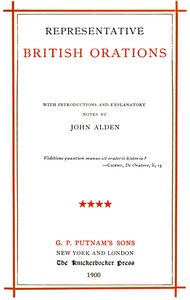
Representative British Orations Volume 4 (of 4): With Introductions and Explanatory Notes
Written by Unknown author
Chaptra reads alongside you — AI insights, chapter breakdowns and reader discussions for every book. Join free
About this book
Reading guide
Themes, characters and key ideas in Representative British Orations Volume 4 (of 4): With Introductions and Explanatory Notes, written by Chaptra AI.
- about 15 hours
- advanced
- informative
- historical
- analytical
This fourth volume of "Representative British Orations" serves as a meticulously curated anthology, presenting a selection of significant speeches delivered by prominent British figures throughout a specific historical period (likely the late 19th to early 20th century, following earlier volumes). Accompanied by insightful introductions and explanatory notes, the collection aims to illuminate key historical events, political debates, and societal shifts through the power of public address. It functions as both a historical document and a study in rhetoric, offering readers a window into the persuasive techniques and intellectual currents that shaped British public life. The compilation underscores the enduring impact of oratorical skill on policy, public opinion, and national identity.
“"The very essence of a free government consists in considering the people as a main spring, and not as a mere check." (Attributed to a likely orator like Charles James Fox, if included)”
Key themes
- The Art of Persuasion and Rhetoric
- This volume is a testament to the power of rhetoric in shaping public opinion and policy. It showcases various oratorical styles, from logical argumentation and classical allusion to emotional appeals and direct, plain speaking. Readers can analyze how speakers crafted their arguments, used literary devices, and adapted their delivery to specific audiences and historical contexts to achieve their political aims.
- Political Reform and Social Justice
- Many orations in this volume address the pressing issues of political and social reform, reflecting periods of significant change in British society. Debates often revolve around expanding the franchise, improving working conditions, addressing poverty, and reforming institutions. These speeches articulate the ideological struggles between conservative preservation and radical change, highlighting the moral and practical arguments for a more equitable society.
- Empire, Foreign Policy, and National Identity
- Given the historical period likely covered by Volume 4, speeches on Britain's imperial role, its foreign policy decisions, and the definition of British national identity are prominent. Orators debate the responsibilities and burdens of empire, the justification for military interventions, and the nation's place on the global stage. These speeches reveal the complex interplay of economic interests, moral justifications, and strategic considerations that shaped Britain's international relations.
Worth discussing
How do the rhetorical strategies employed by the orators in this volume reflect or diverge from contemporary political speech?
Chapter-by-chapter breakdowns, character arcs and the full thematic analysis come with a free account.
Discussions
No one has started one yet
Questions this book opens up
No discussions yet
Be the first to start a discussion about this book!
Sign up to start the discussionReviews
No reviews yet
Be the first to review this book!