
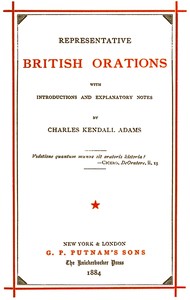
Representative British Orations Volume 1 (of 4): With Introductions and Explanatory Notes
Written by Unknown author
Chaptra reads alongside you — AI insights, chapter breakdowns and reader discussions for every book. Join free
About this book
Reading guide
Themes, characters and key ideas in Representative British Orations Volume 1 (of 4): With Introductions and Explanatory Notes, written by Chaptra AI.
- about 20 hours
- advanced
- Informative
- Historical
- Analytical
This volume, 'Representative British Orations Volume 1 (of 4)', serves as a foundational collection of significant speeches delivered by prominent British figures throughout history. It compiles powerful examples of persuasive rhetoric, historical argumentation, and political discourse that shaped the British nation and its intellectual landscape. Accompanied by editorial introductions and explanatory notes, the book aims to provide readers with critical context and deeper insights into the historical, social, and political circumstances surrounding each oration, making complex historical documents accessible. As the first in a four-volume series, it initiates a comprehensive journey through the evolution of British public speaking and thought.
“While specific quotes depend on the orations included in Volume 1, representative quotes would typically embody: 'The impassioned plea for liberty and justice against perceived tyranny.'”
Key themes
- The Power of Rhetoric and Persuasion
- This theme is central to the entire collection, as each oration is an exercise in rhetoric. The book implicitly and explicitly explores how language, structure, emotional appeals (pathos), logical arguments (logos), and the speaker's credibility (ethos) are employed to influence public opinion, sway legislative bodies, and inspire action. It demonstrates the profound impact words can have on historical events and societal change.
- Liberty, Rights, and Governance
- Many orations in this volume grapple with fundamental questions of individual liberties, the rights of citizens, and the proper structure and limits of governmental power. Speeches often concern debates over constitutional principles, legislative reforms, the balance between state authority and personal freedom, and the definition of justice within a society. This theme traces the evolution of these concepts through British history.
- The Role of Law and Justice
- Many orations, particularly those from legal contexts or parliamentary debates, delve into the intricacies of the law, the pursuit of justice, and the mechanisms of legal and judicial systems. This theme examines how laws are interpreted, applied, challenged, and reformed, and how the concept of 'justice' itself is defined and pursued within a society. It highlights the importance of fair process and the rule of law.
Worth discussing
How do the rhetorical strategies employed by the orators reflect the societal values and intellectual climate of their time?
Chapter-by-chapter breakdowns, character arcs and the full thematic analysis come with a free account.
Discussions
No one has started one yet
Questions this book opens up
No discussions yet
Be the first to start a discussion about this book!
Sign up to start the discussionReviews
No reviews yet
Be the first to review this book!