
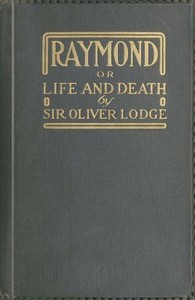
Raymond; or, Life and Death: With examples of the evidence for survival of memory and affection after death.
Written by Oliver Lodge
Chaptra reads alongside you — AI insights, chapter breakdowns and reader discussions for every book. Join free
About this book
Reading guide
Themes, characters and key ideas in Raymond; or, Life and Death: With examples of the evidence for survival of memory and affection after death., written by Chaptra AI.
- about 12 hours
- advanced
- reflective
- poignant
- sorrowful
Sir Oliver Lodge's "Raymond; or, Life and Death" is a profound early 20th-century memoir and spiritualist inquiry, born from the author's personal grief over the loss of his son, Raymond, in World War I. The book begins as a heartfelt tribute to Raymond, featuring his poignant letters from the front lines that reveal his character and experiences. It then transitions into a deeply personal exploration of the possibility of continued existence after death, presenting various forms of 'evidence' for survival of memory and affection through spiritual communication. Lodge, a renowned scientist, meticulously documents alleged messages from Raymond from the spirit world, aiming to bridge the gap between scientific understanding and spiritual belief. Ultimately, it serves as both a moving testament to parental love and a significant document in the history of spiritualism, grappling with themes of loss, remembrance, and the enduring human quest for meaning beyond mortality.
“"The greatest proof of survival is the continued expression of personality, memory, and affection."”
Key themes
- Grief and Remembrance
- The book is fundamentally a testament to profound parental grief and the human need to remember and honor the deceased. Lodge's initial tribute to Raymond is a deeply personal expression of sorrow and love, setting the emotional foundation for the entire work. The act of writing the book itself is an act of remembrance, preserving Raymond's memory and character for posterity.
- Survival of Consciousness / The Afterlife
- This is the central philosophical and spiritual theme. Lodge presents an extensive argument and 'evidence' for the idea that human consciousness, memory, and personality survive physical death. He endeavors to demonstrate that communication with the deceased is possible and that the 'spirit world' is an active continuation of existence.
- Parental Love and Loss
- At its heart, the book is a deeply personal expression of a father's enduring love for his son. Lodge's quest for evidence of the afterlife is fueled by this profound affection and the desire to believe that his relationship with Raymond has not been severed irrevocably by death. It highlights the protective and enduring nature of parental love.
Worth discussing
How does Lodge's background as a scientist influence his approach to spiritualism and the presentation of 'evidence'?
Chapter-by-chapter breakdowns, character arcs and the full thematic analysis come with a free account.
Discussions
No one has started one yet
Questions this book opens up
No discussions yet
Be the first to start a discussion about this book!
Sign up to start the discussionReviews
No reviews yet
Be the first to review this book!