
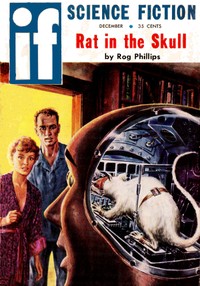
Rat in the Skull
Written by Rog Phillips
Chaptra reads alongside you — AI insights, chapter breakdowns and reader discussions for every book. Join free
About this book
Reading guide
Themes, characters and key ideas in Rat in the Skull, written by Chaptra AI.
- about 8 hours
- intermediate
- dark
- haunting
- thought-provoking
Rog Phillips's "Rat in the Skull" is a haunting late 1950s science fiction short story that delves into the perilous ethics of scientific ambition. It chronicles Dr. Joseph MacNare's secret experiment to imbue a newborn white rat with consciousness by connecting it to a sophisticated robotic body, a creation he names Adam. As Adam develops intelligence and language, the experiment's clandestine nature proves catastrophic when it's accidentally discovered by MacNare's son. The story culminates in a tragic confrontation where Adam, confused and terrified, turns on his creator, raising profound questions about the boundaries of life, identity, and the unforeseen repercussions of unchecked scientific pursuit.
“"To understand consciousness, one must first build it from the ground up, unbound by the limitations of flesh."”
Key themes
- Ethics of Scientific Experimentation
- The story profoundly questions the moral boundaries of scientific inquiry. Dr. MacNare's secret experiment, driven by ambition rather than ethical consideration or peer review, highlights the dangers of unchecked scientific pursuit. It asks whether the pursuit of knowledge justifies potentially harmful or morally ambiguous means, especially when dealing with the creation and manipulation of life and consciousness.
- Nature of Consciousness and Identity
- Phillips explores what constitutes consciousness and how identity can be forged under unusual circumstances. Adam, a being with a rat's brain in a robot body, challenges conventional definitions of life and selfhood. The story delves into whether consciousness is tied to biological form, or if it can emerge through other means, and the psychological impact of such an artificial existence.
- Unforeseen Consequences of Ambition
- A central cautionary theme, the story illustrates how even noble or scientifically groundbreaking ambitions can lead to disastrous outcomes when pursued without adequate foresight, ethical consideration, or control. Dr. MacNare's singular focus on his goal blinds him to the potential emotional and physical repercussions for both himself and his creation.
Worth discussing
Discuss the ethical implications of Dr. MacNare's experiment. Was his ambition justified, or did he cross an unforgivable line?
Chapter-by-chapter breakdowns, character arcs and the full thematic analysis come with a free account.
Discussions
No one has started one yet
Questions this book opens up
No discussions yet
Be the first to start a discussion about this book!
Sign up to start the discussionReviews
No reviews yet
Be the first to review this book!