
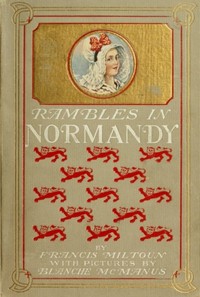
Rambles in Normandy
Written by M. F. (Milburg Francisco) Mansfield
Chaptra reads alongside you — AI insights, chapter breakdowns and reader discussions for every book. Join free
About this book
Reading guide
Themes, characters and key ideas in Rambles in Normandy, written by Chaptra AI.
- about 8 hours
- intermediate
- exploratory
- historical
- romantic
M. F. Mansfield's "Rambles in Normandy" is an early 20th-century travelogue that invites readers on a personal journey through the less-trodden paths of Normandy, France. Eschewing the practicalities of a conventional guidebook, the author offers intimate observations of the region's picturesque landscapes, ancient historical sites, and subtle cultural nuances. Mansfield, a self-proclaimed lover of history and romance, emphasizes Normandy's deep historical ties to England and its architectural similarities, framing the exploration as a rediscovery of shared heritage. The book serves as a collection of subjective experiences and reflections, encouraging readers to appreciate the charm of lesser-known towns and the profound narratives embedded within the land and its people. It is an evocative and contemplative account designed to foster an intimate acquaintance with this storied French region.
“It is not the well-trodden path that yields the truest revelations, but the quiet lanes and forgotten corners where history whispers its secrets.”
Key themes
- The Romance of Travel and Discovery
- This theme explores the intrinsic joy and intellectual stimulation derived from exploring new places, particularly off the beaten path. Mansfield frames travel not just as movement through space but as a journey of personal and historical discovery, emphasizing the emotional and intellectual rewards of intimate engagement with a landscape and its past. It's about finding beauty and meaning in the unexpected and the overlooked.
- Historical Connection and Nostalgia
- A central theme is the profound connection Mansfield feels between present-day Normandy and its rich, often tumultuous, history, particularly its ties to England. The author frequently delves into historical anecdotes, architectural origins, and the legacy of past events, viewing the landscape as a living archive. There's a palpable sense of nostalgia for bygone eras and an appreciation for the enduring impact of history on culture and identity.
- The Nature of Place and Identity
- This theme explores how geographical location, landscape, architecture, and local culture collectively shape the unique identity of a place and, by extension, its inhabitants. Mansfield is keenly aware of the distinct 'spirit' of Normandy, which he seeks to capture through meticulous observation and personal reflection, arguing that a place's identity is more than its geographical coordinates; it's a synthesis of history, aesthetics, and human activity.
Worth discussing
How does Mansfield's 'apologia' at the beginning of the book shape your expectations and experience of reading it?
Chapter-by-chapter breakdowns, character arcs and the full thematic analysis come with a free account.
Discussions
No one has started one yet
Questions this book opens up
No discussions yet
Be the first to start a discussion about this book!
Sign up to start the discussionReviews
No reviews yet
Be the first to review this book!