
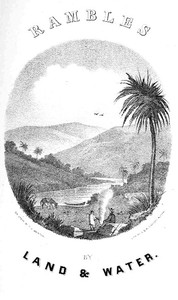
Rambles by Land and Water; or, Notes of Travel in Cuba and Mexico
Written by Benjamin Moore Norman
Chaptra reads alongside you — AI insights, chapter breakdowns and reader discussions for every book. Join free
About this book
Reading guide
Themes, characters and key ideas in Rambles by Land and Water; or, Notes of Travel in Cuba and Mexico, written by Chaptra AI.
- about 10 hours
- intermediate
- exploratory
- observational
- historical
Benjamin Moore Norman's "Rambles by Land and Water" is a mid-19th-century travelogue chronicling his journeys through Cuba and Mexico. The narrative begins with his departure from New Orleans to Havana, offering vivid descriptions of the harbor, city life, and Cuban society, including its striking social contrasts and hospitality. Norman interweaves personal observations with historical reflections, providing insights into the culture, geography, and ancient sites of these regions. A significant portion details a canoe voyage up the River Panuco, as the author delves into the antiquities he encounters. The book serves as an engaging historical document, inviting readers to explore the landscapes and societies of 19th-century Latin America through the author's eyes.
“From the moment our vessel cut the waters of the Gulf, a new world began to unfold before our eager eyes, a world of verdant promise and untold histories.”
Key themes
- Exploration and Discovery
- The fundamental driving force of the narrative, this theme encompasses both geographical exploration (sailing, river voyages, city navigation) and intellectual discovery (uncovering historical facts, observing new cultures). It speaks to the human desire to venture into the unknown and document its wonders.
- Historical Reflection and Antiquities
- A significant aspect of Norman's journey involves engaging with the past, particularly the pre-Columbian history of Mexico. This theme explores the author's fascination with ancient civilizations, the physical remnants they left behind, and the process of interpreting history through archaeological evidence and existing cultural narratives.
- Cultural Observation and Comparison
- Norman meticulously observes and often implicitly or explicitly compares the customs, social structures, and daily lives of the Cuban and Mexican populations with his own background. This theme highlights the process of cultural encounter and the traveler's attempt to understand and interpret foreign societies.
Worth discussing
How does Norman's perspective as a mid-19th-century American traveler shape his observations of Cuban and Mexican societies?
Chapter-by-chapter breakdowns, character arcs and the full thematic analysis come with a free account.
Discussions
No one has started one yet
Questions this book opens up
No discussions yet
Be the first to start a discussion about this book!
Sign up to start the discussionReviews
No reviews yet
Be the first to review this book!