
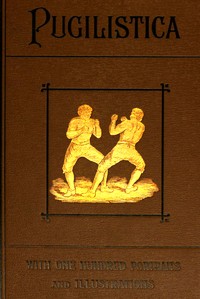
Pugilistica: The History of British Boxing, Volume 3 (of 3): Containing Lives of the Most Celebrated Pugilists; Full Reports of Their Battles from Contemporary Newspapers, With Authentic Portraits, Personal Anecdotes, and Sketches of the Principal Patrons of the Prize Ring, Forming a Complete History of the Ring from Fig and Broughton, 1719-40, to the Last Championship Battle Between King and Heenan, in December 1863
Written by Henry Downes Miles
Chaptra reads alongside you — AI insights, chapter breakdowns and reader discussions for every book. Join free
About this book
Reading guide
Themes, characters and key ideas in Pugilistica: The History of British Boxing, Volume 3 (of 3): Containing Lives of the Most Celebrated Pugilists; Full Reports of Their Battles from Contemporary Newspapers, With Authentic Portraits, Personal Anecdotes, and Sketches of the Principal Patrons of the Prize Ring, Forming a Complete History of the Ring from Fig and Broughton, 1719-40, to the Last Championship Battle Between King and Heenan, in December 1863, written by Chaptra AI.
- about 12 hours
- advanced
- Historical
- Gritty
- Informative
Henry Downes Miles's "Pugilistica: The History of British Boxing, Volume 3" serves as a meticulous historical chronicle of British prize-fighting, specifically covering the period from 1835 to 1863. This volume delves into the lives and careers of celebrated pugilists like William Thompson (Bendigo), detailing their rise, fighting styles, and key battles through extensive reports from contemporary newspapers. Beyond individual biographies, the book captures the evolving cultural significance of boxing, offering insights into the sport's patrons and its role as a public spectacle. It culminates with the seminal championship fight between King and Heenan in 1863, providing a comprehensive, anecdotal, and richly detailed account of the sport's golden age.
“Of Bendigo, it was often said, 'He was a man who fought not merely with his fists, but with his very soul, a true champion of the working man's spirit.'”
Key themes
- The Evolution of Sport and Spectacle
- The book meticulously tracks how prize-fighting evolved from relatively unregulated bare-knuckle brawls into a more structured, albeit still brutal, public spectacle. It covers changes in rules (though still largely under the London Prize Ring Rules), the increasing professionalization of fighters, and the growing organization of events, culminating in the major championship battles. This theme highlights how boxing transformed into a significant form of entertainment and cultural institution.
- Masculinity, Honor, and Endurance
- The prize ring was a crucible for Victorian ideals of masculinity. Fighters demonstrated courage, physical prowess, and an ability to withstand immense pain, embodying a rugged, stoic form of manliness. The concept of 'honor' was paramount, dictating conduct both inside and outside the ring, even in a sport often deemed brutal and uncivilized. Endurance was not just physical, but also mental, as fighters had to overcome fear, injury, and public pressure.
- Social Mobility and Class
- Boxing offered a unique, albeit perilous, pathway for working-class men to achieve fame, fortune, and a degree of social elevation that might otherwise be impossible. The book implicitly explores the stark class divides of Victorian Britain and how the prize ring could temporarily bridge these gaps, with working-class heroes admired by both their peers and aristocratic patrons, even if their status remained precarious.
Worth discussing
How does Miles's use of contemporary newspaper reports and anecdotes shape our understanding of 19th-century boxing compared to modern historical accounts?
Chapter-by-chapter breakdowns, character arcs and the full thematic analysis come with a free account.
Discussions
No one has started one yet
Questions this book opens up
No discussions yet
Be the first to start a discussion about this book!
Sign up to start the discussionReviews
No reviews yet
Be the first to review this book!