
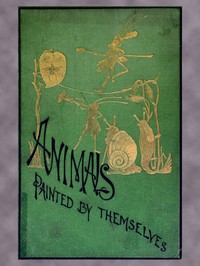
Public and Private Life of Animals: Adapted from the French of Balzac, Droz, Jules Janin, E. Lemoine, A. De Musset, Georges Sand, &c.
Written by Unknown author
Chaptra reads alongside you — AI insights, chapter breakdowns and reader discussions for every book. Join free
About this book
Reading guide
Themes, characters and key ideas in Public and Private Life of Animals: Adapted from the French of Balzac, Droz, Jules Janin, E. Lemoine, A. De Musset, Georges Sand, &c., written by Chaptra AI.
- about 12 hours
- advanced
- humorous
- satirical
- insightful
This unique collection, 'Public and Private Life of Animals,' adapted from the works of prominent 19th-century French authors like Balzac, Sand, and Musset, offers a biting satirical commentary on human society through the allegorical lives of animals. Each vignette or story anthropomorphizes various creatures, endowing them with human vices, virtues, and social structures, thereby mirroring the follies, hypocrisies, and class distinctions prevalent in contemporary Parisian society. The book functions as a collective literary experiment, blending humor, wit, and sharp observation to critique the complex tapestry of human existence under the guise of the animal kingdom. It serves as both an entertaining read and a profound social critique, revealing universal truths about human nature through its animalistic lens.
“While specific quotes vary greatly across the numerous authors and adaptations, representative quotes would typically feature witty observations on human behavior, ironic statements on social norms, or philosophical musings presented through the animal characters. For example, a quote might satirize the pretense of social gatherings: 'The peacock, preening before the assembled fowl, believed his plumage to be the sole measure of his worth, much like the financier displaying his gilded cage.' Another might comment on the illusion of freedom: 'The caged bird, though fed and sheltered, yearned for the wild, yet feared its vast indifference, a dilemma not unknown to man of comfortable chains.'”
Key themes
- Human Folly and Hypocrisy
- This theme is central to the entire collection, as the anthropomorphized animals are consistently used to expose and satirize human vanity, pretense, self-deception, and the gap between professed ideals and actual behavior. From socialites obsessed with appearance to politicians driven by self-interest, the animal characters vividly display the absurdities of human conduct.
- Social Hierarchy and Class Struggle
- The book meticulously recreates the rigid social stratification of 19th-century society within the animal kingdom. Animals are assigned roles and statuses based on their 'species' or 'lineage,' reflecting the aristocratic, bourgeois, and working-class divisions, and the struggles inherent in these structures.
- Nature vs. Civilization (or Artifice)
- Many stories explore the tension between the animals' natural instincts and the artificial constraints and customs imposed by their 'civilized' human-like societies. This theme questions whether 'progress' and 'culture' truly elevate beings or merely add layers of pretense and misery.
Worth discussing
How do the authors use anthropomorphism to critique human society more effectively than direct commentary might?
Chapter-by-chapter breakdowns, character arcs and the full thematic analysis come with a free account.
Discussions
No one has started one yet
Questions this book opens up
No discussions yet
Be the first to start a discussion about this book!
Sign up to start the discussionReviews
No reviews yet
Be the first to review this book!