
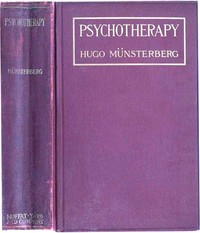
Psychotherapy
Written by Hugo Münsterberg
Chaptra reads alongside you — AI insights, chapter breakdowns and reader discussions for every book. Join free
About this book
Reading guide
Themes, characters and key ideas in Psychotherapy, written by Chaptra AI.
- about 8 hours
- advanced
- Informative
- Analytical
- Foundational
Hugo Münsterberg's "Psychotherapy," published in the early 20th century, is a foundational scientific text advocating for the integration of psychological principles into medical practice. The author seeks to demystify psychotherapy, emphasizing that its efficacy hinges on a rigorous scientific understanding rather than mere moral platitudes. Münsterberg introduces the crucial distinction between the purposive and causal views of psychological influence, arguing that medical professionals must grasp the latter to effectively treat patients. The book serves as a powerful call for the systematic study of psychology within medical training, underscoring its indispensable role in addressing a wide array of health conditions.
“Psychotherapy demands a rigorous scientific understanding, not merely moral support.”
Key themes
- Scientific Rigor in Psychotherapy
- Münsterberg's central argument is the absolute necessity of applying scientific methods and understanding to therapeutic practices. He strongly advocates for moving psychotherapy beyond anecdotal evidence, moral support, or spiritual guidance, and instead grounding it in empirical, causal psychological principles. This theme emphasizes the professionalization and legitimacy of the field as a branch of science.
- Integration of Psychology and Medicine
- A core advocacy of the book is the systematic study and application of psychological principles within medical training and practice. Münsterberg argues that physicians cannot effectively treat patients without understanding the psychological dimensions of their health and illness, making psychology an indispensable component of comprehensive medical care.
- The Dual Nature of Psychological Influence (Purposive vs. Causal)
- Münsterberg introduces a fundamental distinction in how psychological influence can be understood: the 'purposive view,' which relates to an individual's goals and intentions, and the 'causal view,' which is grounded in scientific principles of cause and effect. He argues that while the former might be offered by moral support figures, physicians must operate from the latter to provide effective, scientifically sound therapeutic interventions.
Worth discussing
How does Münsterberg's distinction between 'purposive' and 'causal' psychological influence resonate with contemporary therapeutic approaches?
Chapter-by-chapter breakdowns, character arcs and the full thematic analysis come with a free account.
Discussions
No one has started one yet
Questions this book opens up
No discussions yet
Be the first to start a discussion about this book!
Sign up to start the discussionReviews
No reviews yet
Be the first to review this book!