
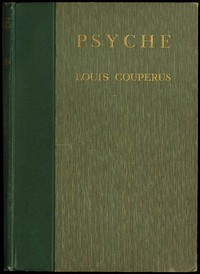
Psyche
Written by Louis Couperus
Chaptra reads alongside you — AI insights, chapter breakdowns and reader discussions for every book. Join free
About this book
Reading guide
Themes, characters and key ideas in Psyche, written by Chaptra AI.
- about 8 hours
- intermediate
- melancholic
- fantastical
- introspective
Louis Couperus's "Psyche" is a poignant symbolist novel following the youngest princess of the Kingdom of the Past, Psyche, a delicate being with nascent wings who yearns for the freedom of true flight and adventure beyond her gilded cage. Trapped by royal expectations and overshadowed by her beautiful sisters, Psyche embarks on a journey of self-discovery, seeking to reconcile her ethereal nature with the realities of the world. Her quest leads her through disillusionment and encounters with both superficial beauty and profound love, ultimately exploring the conflict between idealized dreams and the often-harsh truths of existence. The novel masterfully blends fantastical elements with deep psychological introspection, creating a timeless allegory for the soul's yearning for liberation and genuine connection.
“Her wings, though delicate as gossamer, were yet bound to the earth, a constant whisper of what she might be.”
Key themes
- Longing for Freedom and Escape
- This is the central driving force of Psyche's character and the narrative. Her desire to fly, to leave the castle, and to experience the world beyond her gilded cage represents a universal human yearning for liberation from constraints, whether societal, physical, or emotional.
- Identity and Self-Discovery
- Psyche's entire narrative is a quest for self-understanding. She must reconcile her unique, ethereal nature with the expectations of her royal lineage and the realities of the world. Her journey is about finding her true self and purpose, culminating in the acceptance and full development of her identity.
- Beauty and its Burdens
- The novel explores various forms of beauty—Emeralda's sensuousness, Astra's intellect, Psyche's ethereal delicacy—and questions their value and impact. It suggests that beauty can be both a gift and a burden, leading to confinement, superficiality, or misunderstanding. It distinguishes between superficial, external beauty and a deeper, internal radiance.
Worth discussing
How does Couperus use Psyche's physical wings as a central metaphor throughout the novel? What do they symbolize at different stages of her journey?
Chapter-by-chapter breakdowns, character arcs and the full thematic analysis come with a free account.
Discussions
No one has started one yet
Questions this book opens up
No discussions yet
Be the first to start a discussion about this book!
Sign up to start the discussionReviews
No reviews yet
Be the first to review this book!