
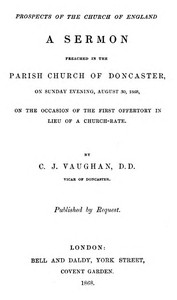
Prospects of the Church of England: A sermon preached in the Parish Church of Doncaster, on Sunday evening, August 30, 1868, on the occasion of the first offertory in lieu of a church-rate
Written by C. J. (Charles John) Vaughan
Chaptra reads alongside you — AI insights, chapter breakdowns and reader discussions for every book. Join free
About this book
Reading guide
Themes, characters and key ideas in Prospects of the Church of England: A sermon preached in the Parish Church of Doncaster, on Sunday evening, August 30, 1868, on the occasion of the first offertory in lieu of a church-rate, written by Chaptra AI.
- about 2 hours
- intermediate
- urgent
- earnest
- admonitory
C. J. Vaughan's 1868 sermon, "Prospects of the Church of England," is a powerful call to action delivered in Doncaster, addressing the critical state and future of the Church amidst contemporary challenges. Vaughan skillfully draws parallels between King Joash's efforts to restore the Temple in Jerusalem and the urgent need for spiritual and physical renewal within the Church of England, particularly in the context of the newly introduced offertory system replacing church rates. He implores his congregation to embrace active financial and spiritual responsibility, warning against the perils of neglect, including the potential threat of disestablishment. The sermon serves as both a historical reflection and a fervent plea for genuine engagement to ensure the Church remains a vibrant and essential presence in society.
“We stand today at a crossroads, where the very fabric of our ancient Church demands renewal, not merely of stone and timber, but of spirit and commitment.”
Key themes
- Church Reform and Maintenance
- This is the central practical theme, directly addressing the need for both physical and spiritual upkeep of the Church of England. Vaughan emphasizes that 'reform' is not just about doctrine but about the practical responsibilities of the congregation, especially in the context of the new offertory system replacing church rates.
- Spiritual Responsibility and Engagement
- Beyond financial contributions, Vaughan stresses the deeper spiritual duty of each individual within the congregation. This theme explores the idea that true faith requires active participation, genuine worship, and a personal investment in the spiritual health of the community, guarding against 'spiritual neglect'.
- Historical Parallelism and Continuity
- Vaughan skillfully uses the biblical narrative of King Joash and the Temple's restoration to create a sense of historical continuity, suggesting that the challenges faced by the Church of England in 1868 are echoes of ancient struggles. This theme positions the present moment within a larger divine plan and historical narrative, lending weight and urgency to his message.
Worth discussing
How does Vaughan's use of the King Joash analogy strengthen or weaken his argument for contemporary church reform?
Chapter-by-chapter breakdowns, character arcs and the full thematic analysis come with a free account.
Discussions
No one has started one yet
Questions this book opens up
No discussions yet
Be the first to start a discussion about this book!
Sign up to start the discussionReviews
No reviews yet
Be the first to review this book!