
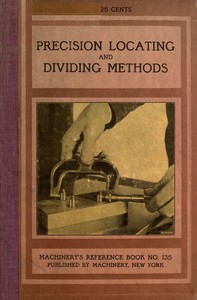
About this book
Reading guide
Themes, characters and key ideas in Precision locating and dividing methods, written by Chaptra AI.
- about 12 hours
- advanced
- Rigorous
- Analytical
- Philosophical
While ostensibly a technical or philosophical treatise, "Precision locating and dividing methods" by Anonymous offers a profound conceptual exploration into the principles of exactitude, order, and human understanding. It meticulously details systematic approaches to identifying positions and segmenting entities, transcending mere instruction to become a rigorous meditation on clarity, definition, and the imposition of structure upon reality. The work functions as a didactic journey, guiding the reader through the intellectual landscape of perfect measurement and demarcation, revealing the philosophical underpinnings of control and the relentless human quest for truth.
“The initial point of reference dictates the universe of measurement; without it, all position is conjecture.”
Key themes
- The Pursuit of Order
- This is the foundational theme, exploring humanity's inherent drive to impose structure, clarity, and predictability upon a seemingly chaotic or indeterminate reality. The book's methods are presented as tools for creating intellectual and physical order, allowing for understanding and control.
- The Nature of Knowledge and Truth
- The text implicitly examines how precision in locating and dividing contributes to what is considered knowable and true. It suggests that accurate measurement and clear demarcation are prerequisites for objective knowledge, challenging the reader to consider the epistemological implications of exactitude.
- Human Control and Mastery
- This theme explores the human capacity to exert agency and command over both the physical environment and abstract concepts through the application of rigorous methods. Precision becomes a means of asserting mastery, transforming chaotic reality into a predictable and manageable domain.
Worth discussing
How does the pursuit of precision, as outlined in the text, reflect broader human desires for control, order, and understanding in an inherently uncertain world?
Chapter-by-chapter breakdowns, character arcs and the full thematic analysis come with a free account.
Discussions
No one has started one yet
Questions this book opens up
No discussions yet
Be the first to start a discussion about this book!
Sign up to start the discussionReviews
No reviews yet
Be the first to review this book!