
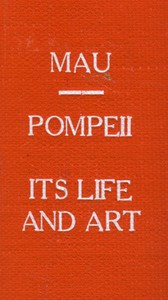
Pompeii, Its Life and Art
Written by August Mau
Chaptra reads alongside you — AI insights, chapter breakdowns and reader discussions for every book. Join free
About this book
Reading guide
Themes, characters and key ideas in Pompeii, Its Life and Art, written by Chaptra AI.
- about 20 hours
- advanced
- informative
- historical
- scholarly
August Mau's "Pompeii, Its Life and Art" offers a meticulous late 19th-century examination of the ancient Roman city of Pompeii. The book comprehensively details the city's geographical context, historical development, and the daily lives of its inhabitants leading up to its catastrophic destruction by Mount Vesuvius in 79 A.D. Mau, drawing on extensive research and personal engagement with the archaeological site, reconstructs Pompeii's vibrant culture, sophisticated architecture, and rich artistic expressions. It serves as a foundational text for understanding the city's pre-eruption existence and the subsequent efforts to unearth and interpret its remnants, providing invaluable insights into Roman provincial life.
“"The geographical position of Pompeii, at the foot of Vesuvius and commanding the fertile plains of Campania, determined much of its prosperity and character."”
Key themes
- The Impermanence of Human Civilization
- This theme is central, as the book details a thriving city brought to an abrupt end by a natural disaster. Mau implicitly highlights how even prosperous and well-established societies are vulnerable to forces beyond their control, underscoring the fragility of human constructs against the backdrop of geological time.
- Daily Life and Culture in Roman Provincial Cities
- A core objective of the book is to reconstruct the everyday existence of Pompeii's inhabitants. Mau meticulously details their homes, public spaces, religious practices, economic activities, and social customs. This theme offers an intimate look into the practicalities and nuances of life in a Roman provincial town, illustrating the blend of Roman imperial culture with local Campanian traditions.
- The Power of Archaeology and Preservation
- Mau's work itself is a testament to this theme. The book not only describes Pompeii but also the process by which it was rediscovered and understood. It champions archaeology as a vital discipline for resurrecting the past, interpreting fragmented evidence, and preserving cultural heritage for future generations, transforming a lost city into a living historical record.
Worth discussing
How does Mau's late 19th-century perspective influence his interpretation of Pompeian life and art, and how might modern archaeology differ?
Chapter-by-chapter breakdowns, character arcs and the full thematic analysis come with a free account.
Discussions
No one has started one yet
Questions this book opens up
No discussions yet
Be the first to start a discussion about this book!
Sign up to start the discussionReviews
No reviews yet
Be the first to review this book!