
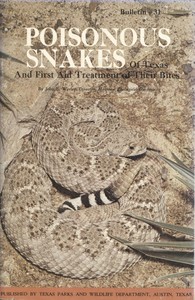
Poisonous Snakes of Texas and First Aid Treatment of Their Bites: Bulletin No. 31
Written by John E. Werler
Chaptra reads alongside you — AI insights, chapter breakdowns and reader discussions for every book. Join free
About this book
Reading guide
Themes, characters and key ideas in Poisonous Snakes of Texas and First Aid Treatment of Their Bites: Bulletin No. 31, written by Chaptra AI.
- about 8 hours
- intermediate
- informative
- cautionary
- practical
John E. Werler's "Poisonous Snakes of Texas and First Aid Treatment of Their Bites" is a seminal scientific bulletin providing an exhaustive guide to venomous snakes in Texas and critical first aid for their bites. Originally published in the 1950s and revised through the 1970s, it meticulously details sixteen species and subspecies, offering descriptions, habitats, ranges, and visual aids for identification. The publication underscores the paramount importance of prevention and rapid, informed response to snakebites, aiming to equip both the general public and medical professionals with life-saving knowledge. It stands as a vital resource for anyone navigating the outdoor environments of Texas, blending scientific rigor with practical public safety directives.
“Accurate identification is the first and most critical step in effective snakebite management.”
Key themes
- Public Safety and Preparedness
- The central theme revolves around arming the public with the knowledge and tools necessary to prevent snakebites and respond effectively if one occurs. This encompasses identification skills, understanding snake behavior to avoid encounters, and knowing precise first aid steps to mitigate harm. The book serves as a crucial public health initiative, aiming to reduce fatalities and severe injuries through education and readiness.
- Scientific Education and Identification
- This theme highlights the importance of accurate scientific knowledge for practical application. The book meticulously details each species and subspecies, emphasizing the need for precise identification as a foundational step in managing snakebite risks. It promotes scientific literacy by providing clear, evidence-based information, debunking myths, and encouraging a rational approach to understanding and dealing with natural threats.
- Human-Nature Interaction and Risk Management
- The book implicitly explores the dynamics of human interaction with the natural world, particularly when that interaction involves potential danger. It advocates for a respectful yet cautious approach to wildlife, recognizing the inherent risks while also providing strategies for coexisting. This theme underscores the necessity of understanding and managing environmental risks through education and proactive measures, rather than through fear or ignorance.
Worth discussing
How has public understanding and medical treatment of snakebites evolved since the initial publication of this bulletin?
Chapter-by-chapter breakdowns, character arcs and the full thematic analysis come with a free account.
Discussions
No one has started one yet
Questions this book opens up
No discussions yet
Be the first to start a discussion about this book!
Sign up to start the discussionReviews
No reviews yet
Be the first to review this book!