
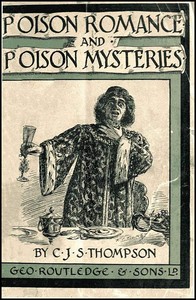
Poison Romance and Poison Mysteries
Written by C. J. S. (Charles John Samuel) Thompson
Chaptra reads alongside you — AI insights, chapter breakdowns and reader discussions for every book. Join free
About this book
Reading guide
Themes, characters and key ideas in Poison Romance and Poison Mysteries, written by Chaptra AI.
- about 12 hours
- advanced
- mysterious
- informative
- dark
C. J. S. Thompson's "Poison Romance and Poison Mysteries" is a late 19th-century historical account that meticulously explores the multifaceted history of poisons. The book masterfully blends factual scientific and historical narratives with captivating tales of intrigue and mythology surrounding toxic substances. Thompson, an esteemed toxicologist, traces the use of poisons from ancient civilizations and primitive man's quest for revenge to their applications in medicine and malevolent acts across various cultures. It delves into infamous cases, mythological figures like Medea and Circe, and the evolving understanding of toxicology, offering a unique perspective on humanity's enduring fascination with these lethal compounds.
“"From the earliest dawn of history, the subtle art of poisoning has been employed as an instrument of vengeance, ambition, and despair."”
Key themes
- The Dual Nature of Poisons
- This is the central theme, exploring how poisons are simultaneously agents of death and tools for healing. The book details their use in ancient medicines, antidotes, and rituals, alongside their more notorious applications in murder, warfare, and political assassination. This duality forces a contemplation of the substance itself versus the intent of its user.
- Human Curiosity and Morality
- Thompson delves into the inherent human fascination with poisons, linking it to our curiosity about life, death, and power. The book implicitly questions the moral boundaries of scientific discovery and application, exploring why humans are drawn to substances that can cause such profound harm, often reflecting darker aspects of human ambition, revenge, and control.
- The Blurring of Fact and Myth
- The book explicitly includes 'romance' and 'mysteries' in its title, signifying its exploration of how historical facts about poisons often intertwine with folklore, mythology, and sensational tales. Thompson examines how legendary figures like Medea and Circe, and the popular imagination, have shaped the perception and fear of poisons, sometimes to the detriment of scientific understanding.
Worth discussing
How does Thompson's blending of 'romance' (mystery/mythology) with factual history influence the reader's perception of poisons?
Chapter-by-chapter breakdowns, character arcs and the full thematic analysis come with a free account.
Discussions
No one has started one yet
Questions this book opens up
No discussions yet
Be the first to start a discussion about this book!
Sign up to start the discussionReviews
No reviews yet
Be the first to review this book!