
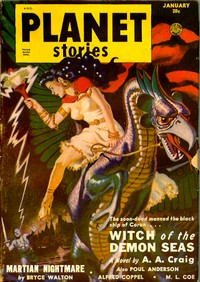
Poison Planet
Written by William Oberfield
Chaptra reads alongside you — AI insights, chapter breakdowns and reader discussions for every book. Join free
About this book
Reading guide
Themes, characters and key ideas in Poison Planet, written by Chaptra AI.
- about 8 hours
- intermediate
- dark
- desperate
- bleak
William Oberfield's "Poison Planet," an early 1950s science fiction novel, thrusts an Earth expedition led by Captain James McBride onto the seemingly pristine yet lethally toxic surface of Venus. What begins as a hopeful exploration quickly devolves into a desperate struggle for survival as the crew faces starvation, unable to cultivate crops amidst the planet's invasive and poisonous flora. The narrative escalates into profound moral and psychological territory, exploring the unraveling of human civilization and the thin veneer of ethics under extreme duress, culminating in acts of suicide and the grim specter of cannibalism. Amidst this bleakness, the botanist Flaunders offers a glimmer of hope with a potential antidote, yet a pervasive atmosphere of suspicion and ethical compromise lingers, forcing the crew to confront their dwindling humanity.
“"Venus, a garden of death. Every leaf, every breath, a silent killer."”
Key themes
- Desperation and Survival
- This is the central theme, exploring the raw, primal instinct to survive when all resources are depleted and hope dwindles. The narrative meticulously details the physical and psychological toll of starvation and isolation, pushing characters to the brink of their humanity.
- The Fragility of Civilization and Humanity
- The novel powerfully illustrates how quickly the societal structures, moral codes, and individual civility can break down under extreme pressure. It suggests that civilization is a thin veneer, easily stripped away to reveal more primal instincts.
- Moral and Ethical Dilemmas
- The story consistently presents characters with impossible choices, forcing them to weigh survival against deeply ingrained moral principles. These dilemmas are not easily resolved, leaving a lingering sense of unease and questioning the nature of right and wrong in extremis.
Worth discussing
How does the extreme environment of Venus act as a catalyst for the crew's moral decay, and what does this suggest about human nature?
Chapter-by-chapter breakdowns, character arcs and the full thematic analysis come with a free account.
Discussions
No one has started one yet
Questions this book opens up
No discussions yet
Be the first to start a discussion about this book!
Sign up to start the discussionReviews
No reviews yet
Be the first to review this book!