
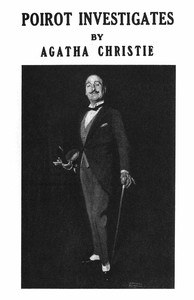
Poirot Investigates
Written by Agatha Christie
Chaptra reads alongside you — AI insights, chapter breakdowns and reader discussions for every book. Join free
About this book
Reading guide
Themes, characters and key ideas in Poirot Investigates, written by Chaptra AI.
- about 8 hours
- intermediate
- mysterious
- clever
- intriguing
Poirot Investigates is a captivating collection of eleven short detective stories featuring Agatha Christie's iconic Belgian detective, Hercule Poirot, and his loyal companion, Captain Arthur Hastings. Published in the early 20th century, these tales showcase Poirot's unparalleled deductive reasoning, his meticulous attention to detail, and his famous "little grey cells" as he unravels a diverse array of mysteries, from stolen jewels to baffling disappearances. The anthology serves as an excellent introduction to Christie's masterful plotting and character work, establishing the enduring appeal of her most celebrated creation within the Golden Age of Detective Fiction. Each story presents a compact puzzle, allowing readers to witness Poirot's unique methods in action, often leading to surprising and satisfying conclusions.
“It is the brain, the little grey cells on which one must rely. One must seek the truth within—not without.”
Key themes
- The Triumph of Order and Intellect
- This theme is central to Poirot's character and methods. He sees crime as a disruption of order and uses his superior intellect and meticulous, logical reasoning ("the little grey cells") to restore balance. His fastidiousness and love for symmetry extend to his approach to solving mysteries, where every loose end must be tied, and every inconsistency resolved.
- Deception and Human Psychology
- Christie masterfully explores how easily people can be deceived, not just by elaborate plots but by their own assumptions, prejudices, and the surface appearances of others. Poirot's genius lies in his ability to look beyond the obvious, to understand human motives, lies, and the psychological underpinnings of criminal behavior. The stories demonstrate that the most cunning deceptions often rely on exploiting human nature.
- Justice vs. Law
- While Poirot generally works within the confines of the law, there are instances where his pursuit of justice might subtly diverge from strict legal enforcement. He is concerned with exposing the truth and ensuring the guilty are held accountable, even if the legal system might sometimes be slow or imperfect. The stories often highlight the moral failings of individuals, even those who appear respectable.
Worth discussing
How does Captain Hastings' narration influence the reader's perception of Poirot and the mysteries?
Chapter-by-chapter breakdowns, character arcs and the full thematic analysis come with a free account.
Discussions
No one has started one yet
Questions this book opens up
No discussions yet
Be the first to start a discussion about this book!
Sign up to start the discussionReviews
No reviews yet
Be the first to review this book!