
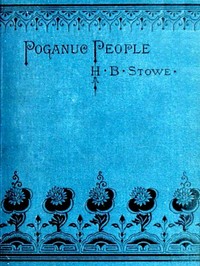
Poganuc People: Their Loves and Lives
Written by Harriet Beecher Stowe
Chaptra reads alongside you — AI insights, chapter breakdowns and reader discussions for every book. Join free
About this book
Read it with a club
Small groups reading the same books and talking as they go.


News
- 3 members
- 1,813 discussions
- Active Sep 11
Read Poganuc People: Their Loves and Lives alongside people who are reading it too.
Also here: News Bulletin, Just Joking....
Chaptra Prime — paid clubs, every club feature, and unlimited reading support, for $5 a month or $60 once.
See PrimeReading guide
Themes, characters and key ideas in Poganuc People: Their Loves and Lives, written by Chaptra AI.
- about 8 hours
- intermediate
- reflective
- quaint
- observational
Harriet Beecher Stowe's "Poganuc People: Their Loves and Lives" is a poignant exploration of 19th-century New England life through the eyes of young Dolly Cushing. As the youngest of ten in a minister's rigid household, Dolly grapples with the strictures of her father's beliefs, particularly regarding the forbidden joys of Christmas. Her innocent curiosity and longing, sparked by conversations with the kitchen maid Nabby, propel her into a journey of discovery within the fictional town of Poganuc. The novel masterfully contrasts the warmth of home life with the constraints of religious dogma, setting the stage for Dolly's coming-of-age amidst evolving societal norms and deeply held traditions.
“"Why, Nabby, what is a 'lumination'? And why does Father say Christmas is a heathen holiday?"”
Key themes
- Childhood Innocence and Discovery
- This theme is central to the novel, explored through Dolly Cushing's perspective. Her unblemished view of the world allows Stowe to highlight the stark contrasts between natural human curiosity and the imposed structures of adult society. Dolly's journey is one of gradual discovery, where simple observations lead to profound insights about life, faith, and community, challenging her initial naive understanding.
- Religious Rigidity vs. Evolving Tradition
- A core conflict in the novel arises from the tension between strict, literal interpretations of religious doctrine (represented by Dolly's father) and the more flexible, evolving traditions and personal expressions of faith within the community. The debate around Christmas serves as a microcosm for broader societal shifts, where older Puritanical values are challenged by newer cultural practices and individual desires for celebration and communal bonding.
- Community and Belonging
- The novel's title, "Poganuc People," emphasizes the importance of community. Stowe meticulously portrays the interconnected lives of the town's residents, showcasing the various social structures, relationships, and unspoken rules that bind them. Dolly's journey is not just personal but also an exploration of what it means to belong to a specific place and its people, highlighting the warmth of communal bonds alongside their inherent constraints.
Worth discussing
How does Dolly's innocence shape the reader's understanding of Poganuc's social and religious structures?
Chapter-by-chapter breakdowns, character arcs and the full thematic analysis come with a free account.
Discussions
No one has started one yet
Questions this book opens up
No discussions yet
Be the first to start a discussion about this book!
Sign up to start the discussionReviews
No reviews yet
Be the first to review this book!