
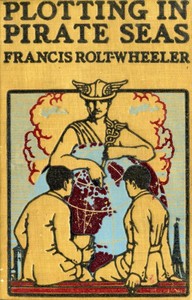
Plotting in Pirate Seas
Written by Francis Rolt-Wheeler
Chaptra reads alongside you — AI insights, chapter breakdowns and reader discussions for every book. Join free
About this book
Reading guide
Themes, characters and key ideas in Plotting in Pirate Seas, written by Chaptra AI.
- about 8 hours
- intermediate
- adventurous
- suspenseful
- patriotic
Francis Rolt-Wheeler's "Plotting in Pirate Seas" is a thrilling early 20th-century historical adventure set in Haiti, where young American Stuart Garfield finds himself embroiled in a dangerous political conspiracy. When his father mysteriously disappears amidst a critical investigation, Stuart is left to navigate a treacherous landscape filled with sinister figures and the ominous backdrop of Voodoo culture. Driven by unwavering patriotism and a desire to rescue his father, Stuart must employ his intelligence and resourcefulness, including adopting disguises, to outsmart local conspirators like Manuel Polliovo and General Leborge. The novel establishes a tone of intense suspense and action, chronicling a young boy's perilous journey to uphold his ideals against looming threats of treachery and save his family.
“"In the heart of Haiti, a boy's courage became the only beacon against the encroaching darkness."”
Key themes
- Patriotism and Duty
- The central driving force behind Stuart's actions. His unwavering loyalty to his country and his sense of duty to protect its interests, as well as his father's honor, compel him to take extraordinary risks and confront grave dangers. This theme is presented as a noble and essential virtue.
- Coming-of-Age and Resourcefulness
- Stuart's journey is fundamentally one of self-discovery and maturation. Faced with extreme adversity and left to his own devices, he must tap into his intelligence, courage, and adaptability to survive and succeed. This transformation from anxious boy to capable hero is a core element of the narrative.
- Good vs. Evil / Treachery
- The narrative clearly delineates between the upright, patriotic actions of Stuart and his father, and the sinister, treacherous schemes of Polliovo and Leborge. The conflict is a moral one, with Stuart representing the forces of justice against the forces of corruption and deceit.
Worth discussing
How does Stuart's patriotism drive his actions, and what are the potential benefits and drawbacks of such fervent national loyalty?
Chapter-by-chapter breakdowns, character arcs and the full thematic analysis come with a free account.
Discussions
No one has started one yet
Questions this book opens up
No discussions yet
Be the first to start a discussion about this book!
Sign up to start the discussionReviews
No reviews yet
Be the first to review this book!