
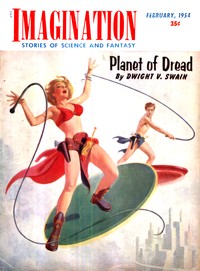
Planet of Dread
Written by Dwight V. Swain
Chaptra reads alongside you — AI insights, chapter breakdowns and reader discussions for every book. Join free
About this book
Reading guide
Themes, characters and key ideas in Planet of Dread, written by Chaptra AI.
- about 8 hours
- intermediate
- dark
- oppressive
- thrilling
Dwight V. Swain's "Planet of Dread" thrusts Federation envoy Craig Nesom into the brutal, oppressive society of Lysor, where the Kukzubas barons, led by the ruthless Lord Zenaor and his sinister aide Vydys, rule with an iron fist. Nesom's mission to investigate Zenaor's aggressive designs against the Federation is immediately complicated by the planet's horrifying spectacles, including the cruel games played with the oppressed Baemae people and deadly creatures. Amidst this savagery, Nesom finds himself drawn to Narla, Zenaor's enigmatic daughter, who is torn between her family's legacy of tyranny and a burgeoning connection with the moral Federation agent. The narrative skillfully weaves themes of rebellion, duty, and personal conflict, setting the stage for a dramatic clash of forces as Nesom navigates a world teetering on the brink of revolt.
“"On Lysor, the greatest game was not survival, but the spectacle of another's demise."”
Key themes
- Oppression vs. Freedom/Rebellion
- This is the central thematic conflict of the novel, explored through the brutal subjugation of the Baemae people by the Kukzubas barons. The 'cruel games' and the overall societal structure illustrate the depths of the oppression, while Craig Nesom's intervention and the Baemae's burgeoning resistance represent the struggle for freedom and the inevitability of rebellion against tyranny.
- Moral Duty vs. Personal Conflict
- The novel explores the tension between an individual's ethical obligations and their personal desires or loyalties. Craig Nesom's duty as a Federation envoy to uphold justice and peace clashes with the brutal realities he faces, potentially leading to difficult choices. Narla's character epitomizes this theme, as she is torn between her family's legacy and her growing attraction to Nesom, which forces her to confront her own moral compass.
- Nature of Power and Corruption
- Swain delves into how absolute power corrupts absolutely, showcasing Lord Zenaor and Vydys as prime examples. Their rule is characterized by cruelty, exploitation, and a complete disregard for the well-being of others, demonstrating the destructive potential of unchecked authority. The novel examines how power can dehumanize both the oppressor and the oppressed.
Worth discussing
How does the novel use the 'cruel games' to establish the moral stakes and the nature of Lysor's society?
Chapter-by-chapter breakdowns, character arcs and the full thematic analysis come with a free account.
Discussions
No one has started one yet
Questions this book opens up
No discussions yet
Be the first to start a discussion about this book!
Sign up to start the discussionReviews
No reviews yet
Be the first to review this book!