
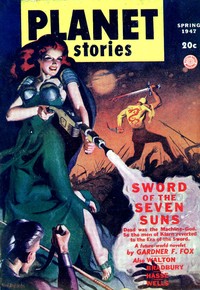
Planet of Creation
Written by Chester S. Geier
Chaptra reads alongside you — AI insights, chapter breakdowns and reader discussions for every book. Join free
About this book
Reading guide
Themes, characters and key ideas in Planet of Creation, written by Chaptra AI.
- about 8 hours
- intermediate
- dark
- mysterious
- cautionary
Chester S. Geier's "Planet of Creation" is a mid-20th century science fiction novel that plunges a defeated fleet of Urgollian spacemen, led by Commander Thettumir, into a desperate search for resources following a devastating loss. They discover a mysterious planet capable of materializing objects from thought, a power they initially exploit to rebuild their forces and create weaponry. However, their unchecked ambition to exact revenge leads to a catastrophic downfall as their thought-created fleet vanishes in the vacuum of space. The narrative serves as a potent cautionary tale, highlighting the dangers of hubris, the fragility of power derived from unknown forces, and the dire consequences of short-sighted desire.
“We have found not just a planet, but a mirror to our own boundless desire, reflecting only what we dare to imagine.”
Key themes
- Ambition and Hubris
- This theme explores the destructive nature of unchecked ambition and the human tendency towards hubris when granted immense power. The Urgollian fleet's initial desperation quickly morphs into an insatiable desire for revenge and dominance, leading them to exploit the planet's unique ability without considering the consequences or understanding its true nature. Their rapid creation of a new fleet and weapons signifies their overreach and belief in their own invincibility.
- Consequences of Desire
- The novel vividly illustrates that even seemingly benign or justifiable desires (like survival or justice) can lead to catastrophic outcomes when pursued without wisdom or restraint. The Urgollian desire for revenge and restoration drives them to misuse a profound power, leading directly to their ultimate downfall. This theme emphasizes the importance of understanding the full implications of one's actions and the potential for unintended, destructive side effects.
- Perils of Unchecked Power and the Unknown
- This theme highlights the inherent dangers of wielding power that is not fully understood or controlled. The Planet of Creation offers an unprecedented ability, but the Urgollian spacemen treat it as a mere tool rather than a complex, potentially dangerous phenomenon. Their failure to comprehend the source or limitations of the thought-materialization power leads directly to their undoing, serving as a warning against blind reliance on forces beyond one’s understanding.
Worth discussing
How does the concept of a thought-materializing planet serve as a metaphor for human desires and their potential consequences?
Chapter-by-chapter breakdowns, character arcs and the full thematic analysis come with a free account.
Discussions
No one has started one yet
Questions this book opens up
No discussions yet
Be the first to start a discussion about this book!
Sign up to start the discussionReviews
No reviews yet
Be the first to review this book!