
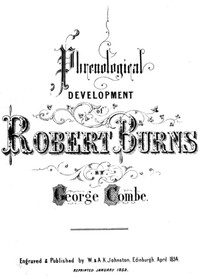
Phrenological Development of Robert Burns: From a Cast of His Skull Moulded at Dumfries, the 31st Day of March 1834
Written by George Combe
Not rated yet — tap a star to review it
Chaptra reads alongside you — AI insights, chapter breakdowns and reader discussions for every book. Join free
About this book
"Phrenological Development of Robert Burns" by George Combe is a scientific publication written in the early 19th century, specifically in the period surrounding the 1830s. The book explores the phrenological analysis of the celebrated Scottish poet Robert Burns, using a cast of his skull to delve into the relationships between physical cranial features and mental faculties, as proposed by phrenology. In this work, Combe presents a detailed analysis of Burns's skull dimensions and the corresponding implications for his character and faculties. He discusses various organs of the brain as they relate to Burns's personality traits, such as his strong passions, artistic talents, and complex emotional nature. The analysis indicates a unique blend of large emotional attachments and moral sentiments alongside notable animal propensities, suggesting a character capable of both significant good and great turmoil. Combe reflects on how Burns's circumstances likely affected the expression of these innate traits, ultimately pondering the potential outcomes had Burns been afforded a different status in life.
Reading guide
Themes, characters and key ideas in Phrenological Development of Robert Burns: From a Cast of His Skull Moulded at Dumfries, the 31st Day of March 1834, written by Chaptra AI.
A reading guide for this book hasn't been written yet. Chaptra builds one the first time a reader opens it.
Chapter-by-chapter breakdowns, character arcs and the full thematic analysis come with a free account.
Discussions
No one has started one yet
No discussions yet
Be the first to start a discussion about this book!
Sign up to start the discussionReviews
No reviews yet
Be the first to review this book!