
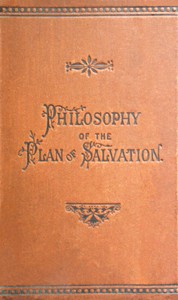
Philosophy of the Plan of Salvation: A Book for the Times
Written by James B. (James Barr) Walker
Chaptra reads alongside you — AI insights, chapter breakdowns and reader discussions for every book. Join free
About this book
Reading guide
Themes, characters and key ideas in Philosophy of the Plan of Salvation: A Book for the Times, written by Chaptra AI.
- about 12 hours
- advanced
- Thought-provoking
- Analytical
- Earnest
James B. Walker's "Philosophy of the Plan of Salvation" is a late 19th-century theological treatise that meticulously argues for the divine origin and necessity of Christianity. The book begins with a personal narrative detailing the author's journey from skepticism to unwavering faith, spurred by inquiries with a friend and extensive biblical and historical examination. Walker explores humanity's relationship with God, the pervasive influence of idolatry, and the fundamental requirement for a moral law, positioning Christianity as the ultimate revelation for moral and spiritual salvation. Through philosophical inquiry and defense, the work aims to address prevailing skepticism and solidify belief in Christian tenets, presenting a comprehensive apologetic for its era.
“"The human mind, in its deepest inquiries, inevitably seeks for a divine revelation that can satisfy its spiritual longings and establish a firm moral foundation."”
Key themes
- The Divine Origin of Christianity
- The central and overarching theme of the book. Walker argues that Christianity is not merely a human-made religion but possesses a unique, divinely inspired origin, making it the ultimate and necessary revelation for humanity. This theme is explored through historical analysis, philosophical reasoning, and an examination of Christian doctrines.
- Skepticism vs. Faith
- This theme explores the tension between intellectual doubt and religious conviction. Walker meticulously details his personal journey from a state of skepticism to a firm belief in Christianity, using his own experience as a testament to the power of reasoned inquiry leading to faith. The book itself is a sustained argument designed to bridge this divide for other skeptics.
- Necessity of Moral Law
- Walker posits that a divinely instituted moral law is indispensable for both individual spiritual well-being and the stability of human society. He argues that human-derived ethics are insufficient and that true morality must be grounded in a transcendent source, which he identifies with the Christian God. This theme connects human behavior with divine will.
Worth discussing
How does Walker's personal journey from skepticism to faith influence the reader's reception of his arguments?
Chapter-by-chapter breakdowns, character arcs and the full thematic analysis come with a free account.
Discussions
No one has started one yet
Questions this book opens up
No discussions yet
Be the first to start a discussion about this book!
Sign up to start the discussionReviews
No reviews yet
Be the first to review this book!