
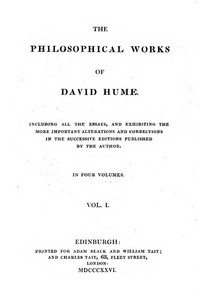
Philosophical Works, v. 1 (of 4): Including All the Essays, and Exhibiting the More Important Alterations and Corrections in the Successive Editions Published by the Author
Written by David Hume
Chaptra reads alongside you — AI insights, chapter breakdowns and reader discussions for every book. Join free
About this book
Reading guide
Themes, characters and key ideas in Philosophical Works, v. 1 (of 4): Including All the Essays, and Exhibiting the More Important Alterations and Corrections in the Successive Editions Published by the Author, written by Chaptra AI.
- about 30 hours
- advanced
- thought-provoking
- analytical
- challenging
David Hume's "Philosophical Works, v. 1" is a foundational collection presenting the core tenets of his empirical and skeptical philosophy, compiled to showcase his thought, particularly as refined in later editions. This volume begins with a revealing autobiography, offering insight into Hume's intellectual development and the initial reception of his controversial ideas. Subsequently, it delves into seminal essays exploring the nature of human understanding, the origins of moral principles, and the basis of belief, challenging traditional metaphysical and rationalist views. Through rigorous analysis, Hume dissects concepts like causation, personal identity, and the limits of human reason, establishing himself as a pivotal figure in the Enlightenment. The work serves as an indispensable entry point into his profound contributions to epistemology, ethics, and the philosophy of mind.
“"A wise man, therefore, proportions his belief to the evidence."”
Key themes
- Empiricism and the Origin of Ideas
- Hume's foundational theme is that all knowledge originates from sensory experience. He famously distinguishes between 'impressions' (immediate, vivid sensations and feelings) and 'ideas' (faint copies of impressions in thought). This principle dictates that any meaningful idea must be traceable back to an impression, challenging abstract concepts without empirical grounding and forming the bedrock of his critique of metaphysics.
- Skepticism and the Limits of Human Understanding
- Hume is renowned for his radical skepticism, particularly concerning the foundations of knowledge that extend beyond immediate experience. He challenges the rational basis for belief in causation, induction, and the external world, arguing that such beliefs are products of custom and habit rather than strict logical deduction or rational insight. This skepticism highlights the inherent limitations of human reason and the pervasive role of psychological propensities.
- Moral Sentiment vs. Moral Reason
- Hume's moral philosophy argues that moral judgments are ultimately founded on sentiment (feeling) rather than pure reason. He contends that reason can only inform us about facts and relations, but it cannot compel us to act or make value judgments. Instead, our moral approvals and disapprovals stem from a natural human capacity for sympathy and a sense of utility, which lead us to commend actions that promote general well-being and condemn those that cause harm.
Worth discussing
How does Hume's autobiography influence our understanding of his philosophical project and the reception of his ideas?
Chapter-by-chapter breakdowns, character arcs and the full thematic analysis come with a free account.
Discussions
No one has started one yet
Questions this book opens up
No discussions yet
Be the first to start a discussion about this book!
Sign up to start the discussionReviews
No reviews yet
Be the first to review this book!