
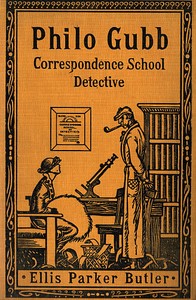
Philo Gubb, Correspondence-School Detective
Written by Ellis Parker Butler
Chaptra reads alongside you — AI insights, chapter breakdowns and reader discussions for every book. Join free
About this book
Reading guide
Themes, characters and key ideas in Philo Gubb, Correspondence-School Detective, written by Chaptra AI.
- about 8 hours
- intermediate
- humorous
- lighthearted
- satirical
Ellis Parker Butler's "Philo Gubb, Correspondence-School Detective" is a delightful early 20th-century humorous novel chronicling the bumbling adventures of Philo Gubb, an earnest paper-hanger aspiring to be a master sleuth through a mail-order course. The narrative thrives on the comedic juxtaposition of Gubb's naive determination and the absurd realities of his 'cases,' often involving eccentric characters and farcical misunderstandings. His peculiar roommate, Mr. Critz, an aspiring con artist, serves as a cynical foil, further heightening the comedic tension and satirical elements. The book offers a lighthearted critique of the burgeoning detective genre and the human tendency towards grand, often misguided, aspirations, making it a character-driven tale rich in irony and gentle satire.
“"A good detective must observe, Mr. Critz. Every detail, however insignificant, may be the key!"”
Key themes
- Aspiration vs. Reality
- This theme explores the often-humorous gap between Philo Gubb's idealized vision of detective work, as taught by his correspondence school, and the messy, illogical, and often mundane reality of the cases he encounters. It highlights the human tendency to pursue grand ambitions despite a lack of natural talent or understanding of practicalities.
- The Nature of Detection and Crime (Satire)
- The novel functions as a gentle satire of the popular detective fiction genre that was flourishing in the early 20th century. It pokes fun at the often-overly dramatic methods, the reliance on seemingly brilliant deductions, and the romanticized image of the lone, genius sleuth, by showing how ridiculous such methods can appear when applied by a naive amateur.
- Human Folly and Eccentricity
- Butler revels in portraying a world populated by quirky, often absurd characters, including Gubb himself and his roommate Critz. The humor often arises from the inherent follies of human nature – our desires, our misunderstandings, our peculiar habits, and our often-illogical thought processes. It's a celebration of the unique oddities that make people interesting.
Worth discussing
How does Butler use Philo Gubb's correspondence school lessons to create humor and satire?
Chapter-by-chapter breakdowns, character arcs and the full thematic analysis come with a free account.
Discussions
No one has started one yet
Questions this book opens up
No discussions yet
Be the first to start a discussion about this book!
Sign up to start the discussionReviews
No reviews yet
Be the first to review this book!