
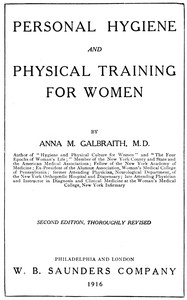
Personal hygiene and physical training for women
Written by Anna M. (Anna Mary) Galbraith
Chaptra reads alongside you — AI insights, chapter breakdowns and reader discussions for every book. Join free
About this book
Reading guide
Themes, characters and key ideas in Personal hygiene and physical training for women, written by Chaptra AI.
- about 8 hours
- intermediate
- informative
- instructive
- empowering
Anna M. Galbraith's "Personal Hygiene and Physical Training for Women" is a pioneering early 20th-century medical and instructional guide tailored for women. The book meticulously outlines principles of personal hygiene and physical fitness, emphasizing their critical role in individual well-being and broader societal efficiency, particularly as women increasingly entered the workforce. Galbraith, a medical professional, blends scientific explanations of anatomy and physiology with practical advice on diet, exercise, and daily habits. It serves as both an educational resource and a call to action, urging women to prioritize their health to contribute effectively to a modernizing society, reflecting the progressive health movements of its era.
“"Physical efficiency is not only vital to individual health but is also a growing societal concern, especially as women engage more in the workforce and public life."”
Key themes
- Women's Health and Empowerment
- This is the core theme, emphasizing that knowledge of one's body and the practice of hygiene and physical training are fundamental to women's personal autonomy and empowerment. Galbraith seeks to arm women with the information necessary to take control of their own well-being, moving beyond traditional constraints or ignorance regarding female physiology.
- Societal Responsibility and Efficiency
- Galbraith argues that women's individual health is not just a private matter but a crucial component of societal progress and efficiency. As women increasingly entered the public sphere and workforce, their physical well-being became a collective concern, directly impacting national strength and productivity. The book frames good health as a civic duty.
- The Scientific Approach to Life
- The book champions a rational, evidence-based approach to personal health and lifestyle choices. Galbraith, as a medical professional, systematically dissects bodily functions and offers advice grounded in scientific principles of anatomy, physiology, and hygiene, rather than superstition or tradition. This reflects a broader societal trend towards scientific modernization in the early 20th century.
Worth discussing
How does Galbraith's emphasis on 'societal concern' and 'contributing effectively to society' reflect the broader social and political climate for women in the early 20th century?
Chapter-by-chapter breakdowns, character arcs and the full thematic analysis come with a free account.
Discussions
No one has started one yet
Questions this book opens up
No discussions yet
Be the first to start a discussion about this book!
Sign up to start the discussionReviews
No reviews yet
Be the first to review this book!